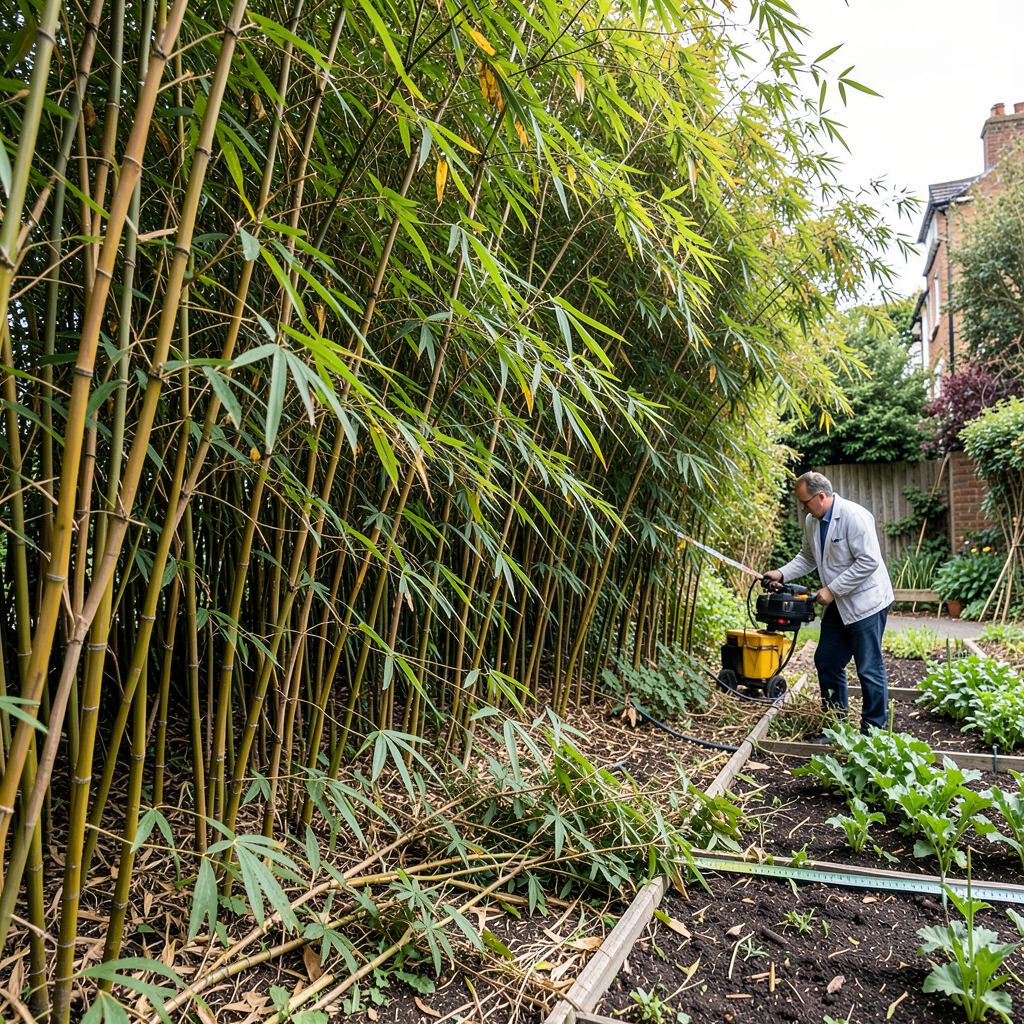

Invasive bamboo has placed Brighton among the UK’s most affected postcode areas, according to requests received by plant specialist Environet in 2026.
The BN area generated 4.5 per cent of the company’s enquiries nationwide, behind only Guildford and Kingston upon Thames.
These figures relate to enquiries and survey requests made to Environet, which provides removal services, and do not represent the total number of bamboo infestations.
Redhill, Twickenham and Southampton were among nine other southern postcodes appearing in the top ten.
While bamboo is not always invasive, running varieties can travel underground for 10 metres or more.
Shoots may emerge through lawns, paths and patios, as well as beneath homes and sheds.
One couple living just outside Brighton reportedly lost their conservatory after bamboo from a neighbouring property spread underneath it.
A 2025 YouGov poll found that 39 per cent of British adults would be reluctant to purchase a property affected by a bamboo infestation.
Brighton’s position has also risen, having ranked fifth nationally in 2025.
Environet director Emily Grant said the company’s 2026 data indicated that demand for bamboo removal was strongest in southeast England, with the BN postcode third.
Bamboo is frequently planted in cities and densely populated areas for screening but can establish itself and spread rapidly.
According to Grant, bamboo now attracts more enquiries than Japanese knotweed.
Residents were advised to look for shoots away from the original plant or paving stones that have been displaced, and to raise concerns with neighbours early.
A bamboo survey can determine the scale of an infestation and provide an approximate removal cost, but the assessment alone is expected to cost homeowners around £300.