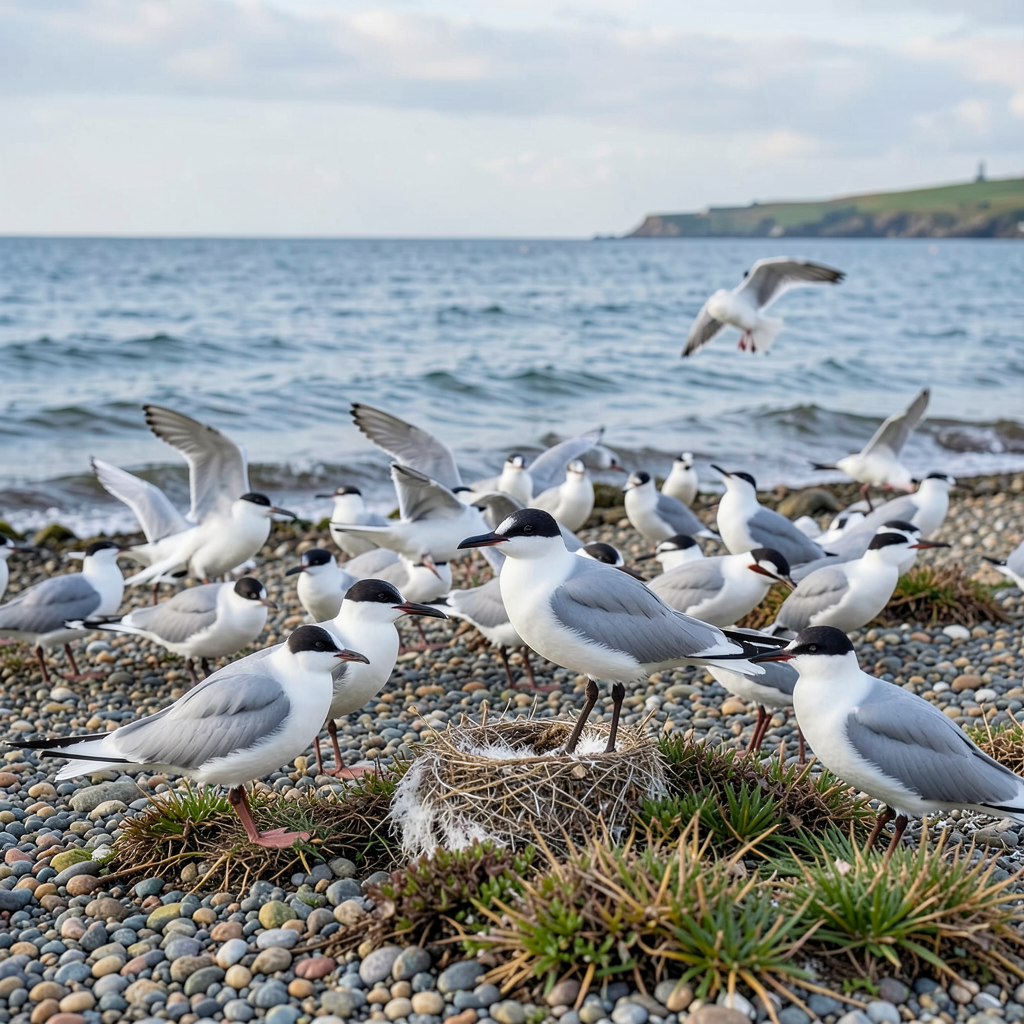

A seabird colony in West Sussex that suffered catastrophic losses due to bird flu has achieved an extraordinary recovery, according to a leading conservation organisation.
Breeding numbers along sections of the Solent have reached unprecedented levels following sustained conservation work by the RSPB and partner groups, the charity reported.
One of the most significant recoveries has been observed among Sandwich terns, whose breeding population at RSPB Pagham Harbour expanded from zero pairs to 756 in just three years.
The species had entirely vacated the West Sussex site in 2022 after an outbreak of highly pathogenic avian influenza devastated local wildlife.
The viral disease also severely impacted black-headed gulls and Mediterranean gulls at the same location.
Following the crisis, the RSPB collaborated with the Solent Seascape Project to implement an extensive conservation programme spanning several years.
The intervention proved effective, with Sandwich tern breeding pairs flourishing and 570 fledglings recorded in the most recent season.
Black-headed gull numbers also showed substantial growth, with fledgling counts at RSPB Pagham Harbour rising from 51 in 2025 to 504 the following year.
Little tern populations similarly strengthened, increasing from 21 fledglings to 34 across the same period.
Breeding populations of ringed plovers and oystercatchers expanded along the Solent coastline, while avocets experienced notable reproductive success.
Conservation measures included maintaining optimal nesting habitat conditions through selective vegetation clearance.
Teams conducted surveillance for rodent activity and installed predator-exclusion fencing to shield ground-nesting species from mammalian threats.
Continuous monitoring was maintained through ground patrols and remote camera systems.
Elsewhere, wetland restoration work undertaken as part of the Downs to the Sea initiative benefited avocet populations.
New islands were constructed within the saline lagoon at Ferry Pool, providing additional nesting areas for avocets and little ringed plovers.
These newly established islands hosted 18 avocet breeding pairs, a remarkable increase compared to previous years when single pairs nested at the site in 2003 and 2010, and just two pairs each in 2012 and 2018.
From this year’s nesting effort, 24 avocet fledglings were recorded at Ferry Pool.
The islands require ongoing maintenance to ensure they remain suitable for seabird breeding, according to the conservation group.
Throughout the breeding season, the harbour receives protection from RSPB rangers and volunteers who conduct patrols to inform visitors and local residents, helping to reduce human disturbance.
The conservation works have enhanced critical wetland environments for birds, mammals, and invertebrates, while new visitor infrastructure including pathways, viewing platforms, and seating areas has improved public access to the site.
The Solent Seascape Project involves multiple partner organisations working to restore habitats and wildlife populations across the strait on England’s south coast.