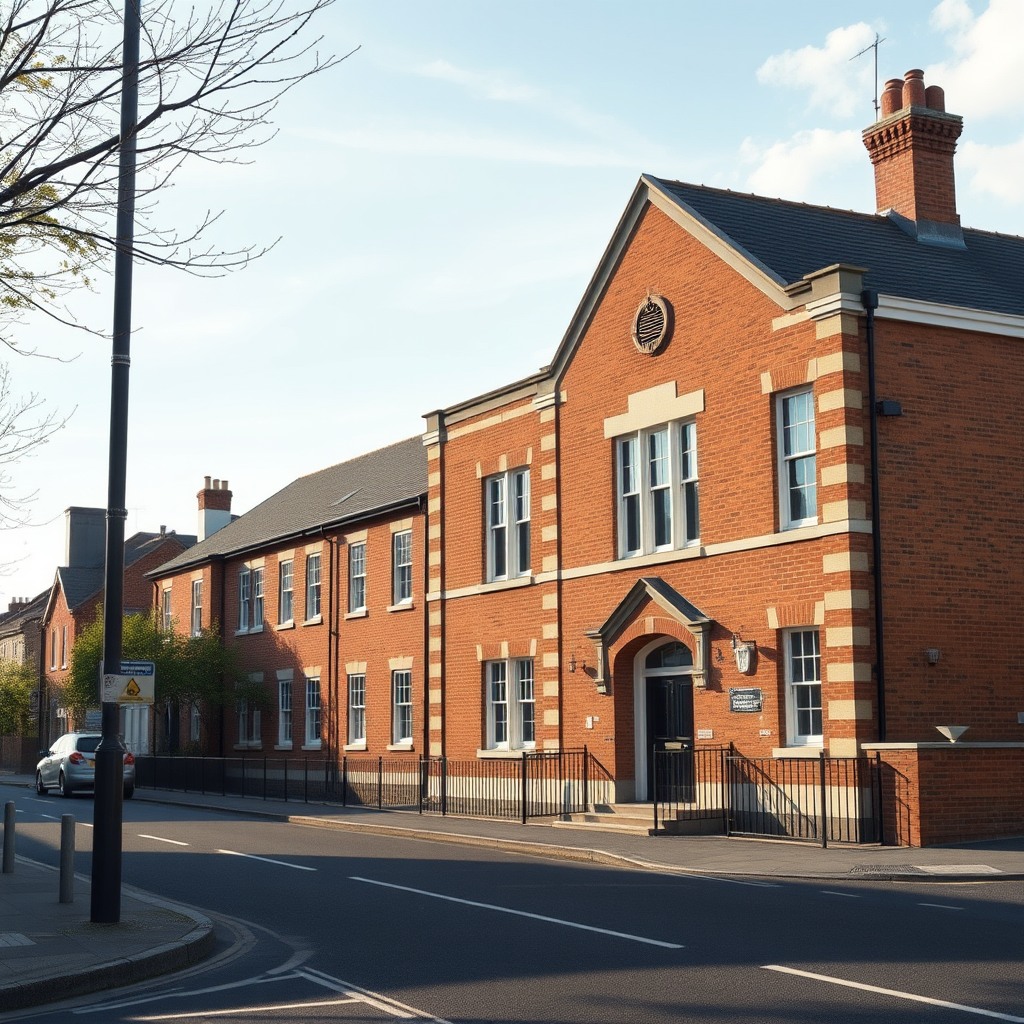

The proposed closure of Brighton’s oldest primary school has prompted a series of questions from concerned councillors.
The questions about Middle Street Primary School were in response to a report on checks carried out by Brighton and Hove City Council’s internal audit team.
The school was the subject of two internal audits with the latest one described as a “follow up audit” in the recently ended 2025-26 financial year.
The initial audit flagged up 17 areas of concern and the council later issued a warning notice to the school before replacing the school’s governors with an interim executive board (IEB).
It is the first time that the council has appointed an IEB. It can only do so if a school is causing concern – and it is such a serious step that it must be signed off by the Education Secretary.
All of the 17 issues were outstanding when the governors were removed and 11 had been addressed when a follow up audit was carried out, according to a report to councillors.
The report said: “actions were required to…
declare and effectively manage conflicts of interest
improve financial controls regarding raising purchase orders, evidence of monthly payroll approval and maintaining a contract register
improve the process of new starters to ensure that all pre-employment checks are completed and appropriate information is retained to evidence this
improve the process of exit interviews for staff leavers to ensure feedback and insight is shared appropriately with senior leadership and
maintain and implement a data protection policy
“At the time of the audit, the school was being governed through an interim executive board (IEB), approved by the Department for Education in June 2025.”
In response to a question from Conservative councillor Anne Meadows, council audit manager Carolyn Sheehan said the IEB had since addressed the outstanding issues.
Councillors were told the IEB initially drew up a rescue plan for the school before, months later, saying that the school was no longer financially viable and should close.
Parents and staff have said that the council was warned about significant problems at the school but failed to take those warnings seriously enough and did too little too late.
And the questions from councillors suggested that they wanted to know whether existing checks and balances and “triggers” were sufficient and properly heeded when they should have been.
The council’s head of education Richard Barker said those questions – and the relevant timelines – were points that an independent “lessons learnt” report would explore.
Before the IEB was appointed, several families withdrew children from the school over safeguarding concerns in autumn 2024 and staff turnover was high – and as a result, spending on staff cover went up.
After the IEB was appointed, it proved unable to quell fears that the school would close and more parents pulled their children out of the school.
The council’s audit, standards and general purposes committee was told that funding was largely dependent on pupil numbers and, as a result of having fewer pupils, the financial outlook continued to worsen.
When the committee met at Hove Town Hall on Tuesday (April 21), councillors appeared to want reassurance that officials would be able to respond appropriately in future to prevent similar problems from threatening the future of any other local school.
Mr Barker said the council had limited powers in law and took significant action including the issuing of a warning notice and the replacement of the governors with the IEB.
Mr Barker said: “We were aware of issues and worked with the governing body and the leadership of the school.
“When the situation tipped into a point where we needed to introduce an IEB, that’s what we did.”
Labour councillor Josh Guilmant, a teacher by profession, said: “Is the process satisfactory? Are we going in, talking to the head, talking to the leadership, talking to the governors?
“This (Middle Street) is obviously one that should have been highlighted and there should have been more focus around that.
“Do we have an effective audit process in place? Is there something more we should be doing and we should be looking at going forward so this doesn’t happen again?”
Mrs Sheehan said an auditor would speak to the head, with a governor invited along, and spend quite a bit of time with the school business manager.
She also said: “We are constantly looking at the school audit programme to see if there is more that we can do.”
Labour councillor Lucy Helliwell, another teacher by profession, asked: “Did the council’s standard monitoring identify the necessary triggers that required some action or some involvement at some level?
Read more
Housing development secures formal permissionNew food waste collections set to ‘improve’, councillors toldE-scooter trial approved for Brighton and HoveHistoric cottage at centre of infamous libel case that inspired film goes on sale
“And do we think that there was enough monitoring going on because we would have been aware that there were (falling) pupil numbers and there were some issues with staffing?”
The council had also tracked the school’s financial deficit which reached about £425,000 in three years on a budget of about £1 million a year.
Mr Barker said the council had been aware of issues and the “lessons learnt” report would look at some of these issues and the decision-making at relevant points.
The council’s senior lawyer Elizabeth Culbert said the committee should stick to its remit – the report on internal audits – rather than wider questions about what led to the proposal to close the school.
Cllr Guilmant asked whether there would be a way of responding more quickly to warning signs.
Mrs Sheehan said the audit team aimed to look at a reasonable sample of pre-school, primary, secondary and special schools.
Risk was considered when deciding which schools to audit, she said. This could include financial risk such as the size of the budget or any deficit or surplus.
Some schools requested an audit, particularly when a new business manager joined, and often found the process helpful, she added.
The government requires a programme of internal audits to provide assurance to the council’s finance chief that grant funding has been spent properly.
In March, the council’s cabinet agreed to start the formal process that is expected to end with the closure of Middle Street Primary School on Monday, August 31.
A four-week period for representations is due to end on Sunday, May 5. The responses are due to be considered at a special council meeting on Thursday, May 21.