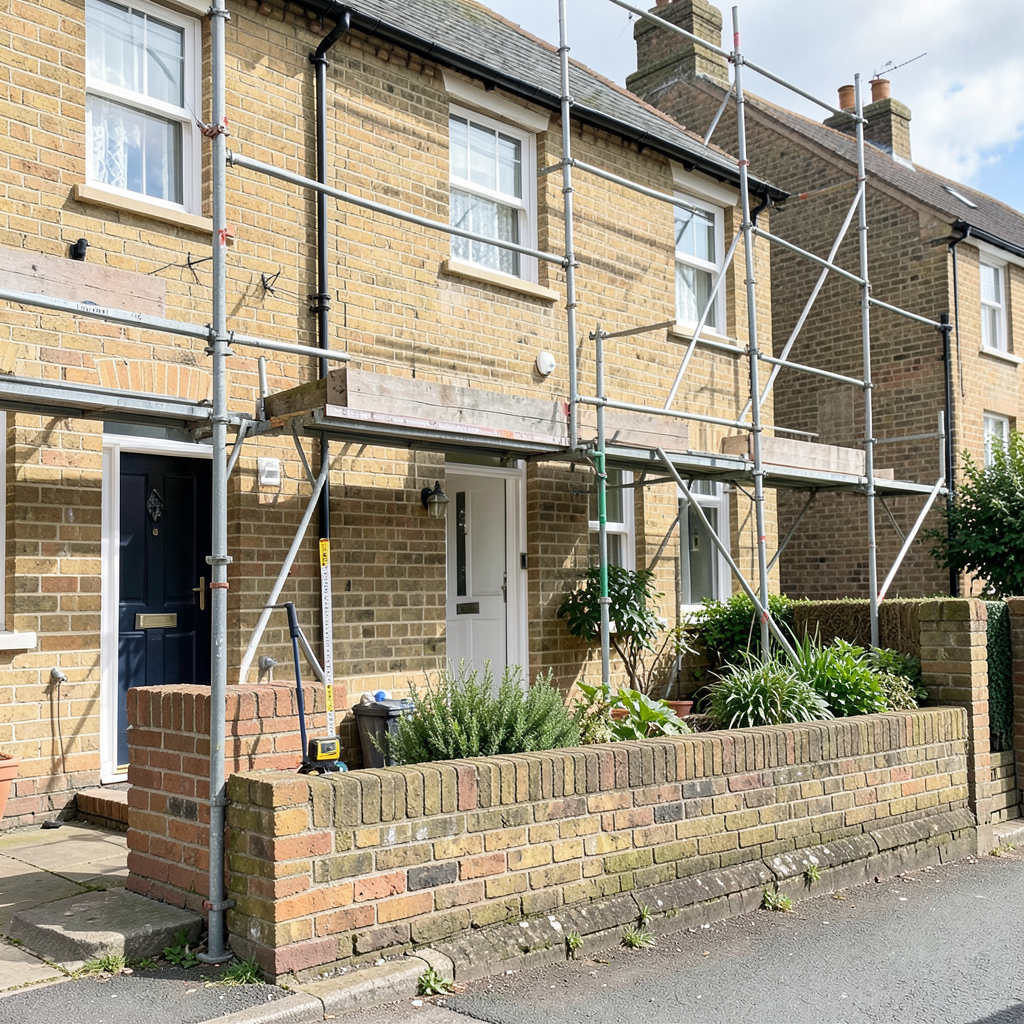

An eight-bedroom house in multiple occupation (HMO) will replace a former children’s home after conversion plans received approval.
Permission for the change of use has been awarded for the property on Rowlands Road in Worthing, which was converted to a single dwelling back in 2014.
Situated at the end of a short Victorian terrace row, the two-storey building will provide single-room lets for as many as eight adults.
Shared amenities will comprise two bathrooms, four lavatories and two cooking areas.
The proposal also includes communal sitting and eating spaces, along with a garden at the back.
No exterior modifications to the structure are intended.
The premises were last operated by the Young Men’s Christian Association to accommodate between six and seven adults who had support workers present on site.
In granting approval, council officials observed that HMOs are a frequent housing choice in Worthing’s established residential areas and serve a vital function in housing those with limited means, people claiming benefits, and early-career workers.
Sussex Police provided supplementary advice, given worries expressed elsewhere that HMO developments can result in higher levels of nuisance behaviour.
A force representative stated that there are documented instances where houses of multiple occupancy have triggered incidents of antisocial conduct.
To minimise the likelihood of this happening, rigorous tenancy management would be required.
The spokesperson further noted that worries existed regarding the possible fragility of residents and requested these be reflected in operational strategies.
The applicant has committed to running the premises according to a framework intended to address these issues through explicit household regulations, anticipated conduct requirements and weekly checks.
West Sussex County Council suggested decreasing the number of parking spaces on site from four to three, to prevent cars reversing onto the highway.
The applicant opted not to follow this suggestion, though it was not treated as grounds for refusal given comparable setups in the vicinity.
Planning officials determined that the proposed HMO would not harm the neighbourhood’s appearance or affect neighbouring homes, considering the building’s previous use for shared habitation.