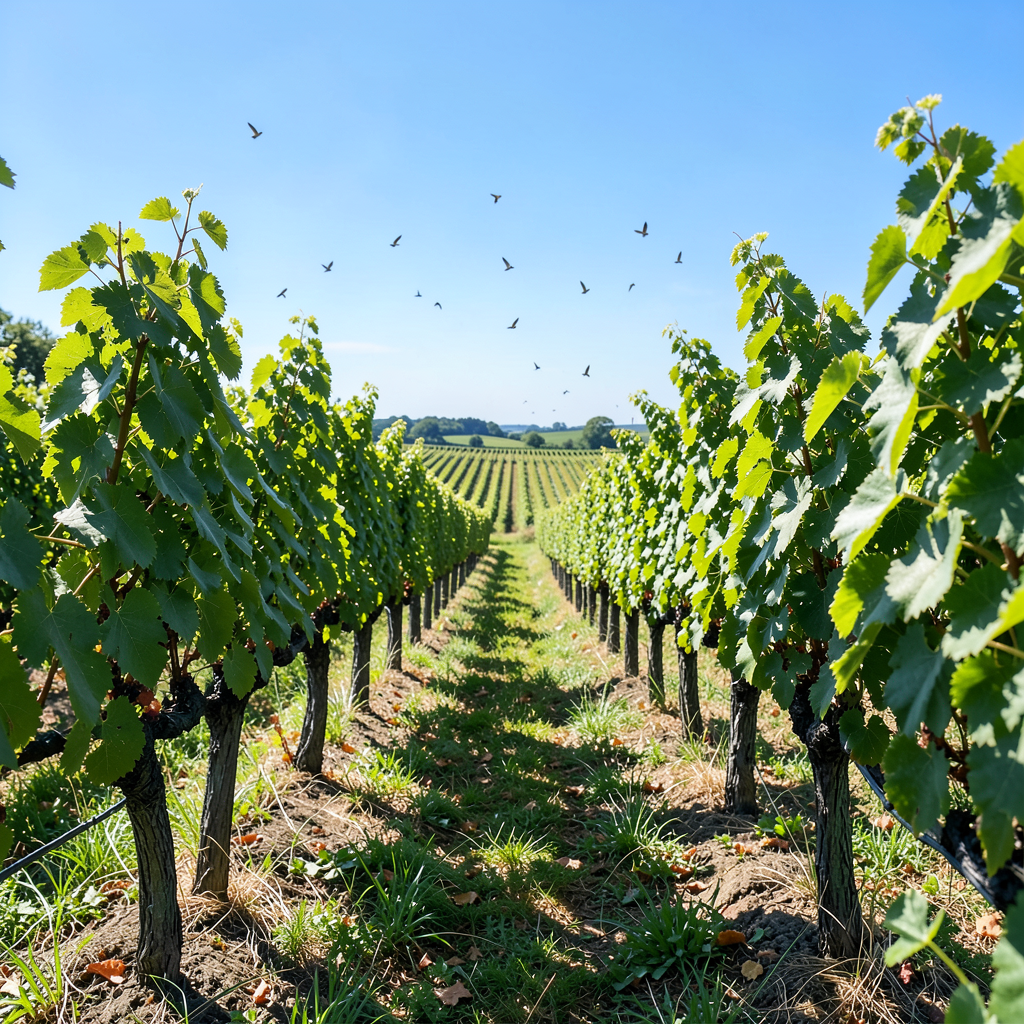

Sussex boasts 140 commercial vineyards, establishing the county as the epicentre of England’s wine sector.
Kristin Syltevik of Oxney Estate in East Sussex discusses her path into winemaking and her commitment to organic viticulture with this publication.
Could you tell us about your background?
My partner Paul, an organic farmer, and I established the vineyard in 2012.
Prior to breaking ground, I spent my career working in public relations with a focus on technology. Following stints at several agencies, I co-founded my own business with a colleague in 2000. We grew operations across Europe and America before eventually being acquired by a major marketing services company.
So what came next? It seemed logical to consider producing and crafting something tangible, utilising the organic agricultural land available to us. Farmers frequently discuss diversification, and this represents the ultimate diversification venture.
Unlike most English vineyards, Oxney champions organic wines with Soil Association certification. Could you elaborate?
When we committed to launching a vineyard, operating it organically was our primary consideration. Our household exclusively purchased organic produce, we maintained a smallholding using organic methods (though uncertified), and the arable farm we began assembling in 2009 was already organic, so it felt natural.
We chose this path primarily because we witnessed the harm conventional farming inflicts on soil, the environment, wildlife, and water supplies. Walking through the British countryside makes this abundantly clear.
Many people are actively seeking healthier eating options, prioritising local produce, and choosing organic. Soil Association reports indicate rising numbers, which cannot be said for every food and beverage sector in Britain.
Achieving organic status requires adhering to stringent regulations, no herbicides or pesticides, and an extremely restricted range of treatments for mildews and similar threats that particularly affect vineyards in this climate.
We produce our own compost and craft many of our own herbal sprays. In the winery, we adopt a minimal intervention approach, with particularly stringent limits on fining agents and sulphites compared to conventional winemaking.
What makes your particular East Sussex terroir distinctive for grape cultivation?
We fall within the Rother River Wine region, an emerging and dynamic wine area in East Sussex. Situated within the Rother River catchment, the region covers the River Rother and its tributaries the Tillingham and the Brede.
This wine region occupies the part of Britain receiving the highest annual sunshine, features low-elevation vineyards with warm, fertile soils comprising clay, silt and sandstone that retain heat, ideal south-facing gradients, and a distinctive microclimate that diverts rain clouds.
Our vineyard sits at just 17 metres elevation, ten kilometres from the coast, three fields distant from the River Rother, with mature oak trees throughout. We were unaware at the time how fortunate we were to discover this exceptional location.
So far, do you anticipate a strong year for wines in this region of England?
This year has presented difficulties, reminding us that agriculture remains dependent on unpredictable weather patterns.
Spring frost poses significant challenges, and unfortunately we experienced this this year. However, any UK vineyard must account for occasional frost years in their planning.
We produce traditional method sparkling wines alongside limited quantities of still wines, so the occasional frost year does not fundamentally compromise our operations. Still deeply disappointing though.
How can wine enthusiasts visit Oxney?
The most rewarding aspect of grape cultivation and winemaking is encountering wonderful people. Wine enthusiasts appear to be genuinely pleasant individuals.
We receive guests from Tuesday through Sunday during summer months, with reduced opening times in winter, offering wine flights, informal wine discussions, and light meals. Saturdays feature guided tours and tastings. Additionally, we offer accommodation in converted barns, a historic farmhouse, and two shepherd’s huts set among the vines.
Where can customers purchase Oxney wines across Sussex and beyond?
Oxney products are stocked throughout Sussex, in London and the South East, and nationally. International sales extend to Germany, Norway, South Korea and additional markets. In Brighton, we maintain established relationships with Terre à Terre and Quaff.
How do you envision the English wine industry evolving over the next five years?
It represents a fascinating sector, reminiscent of the industry transformations I witnessed directly in technology, abundant with passionate entrepreneurs, not all of whom will succeed, followed by inevitable consolidation.
Grape cultivation, winemaking, and wine sales demand considerable resilience. Like other industries where products span from handcrafted, organic, world-class offerings to more affordable mass-market alternatives, space exists for diverse producers of all scales. Consumers will ultimately determine outcomes, and we are delighted that many select our organic wines.
Visit www.oxneyestate.com for further details regarding tours, tastings and accommodation packages.