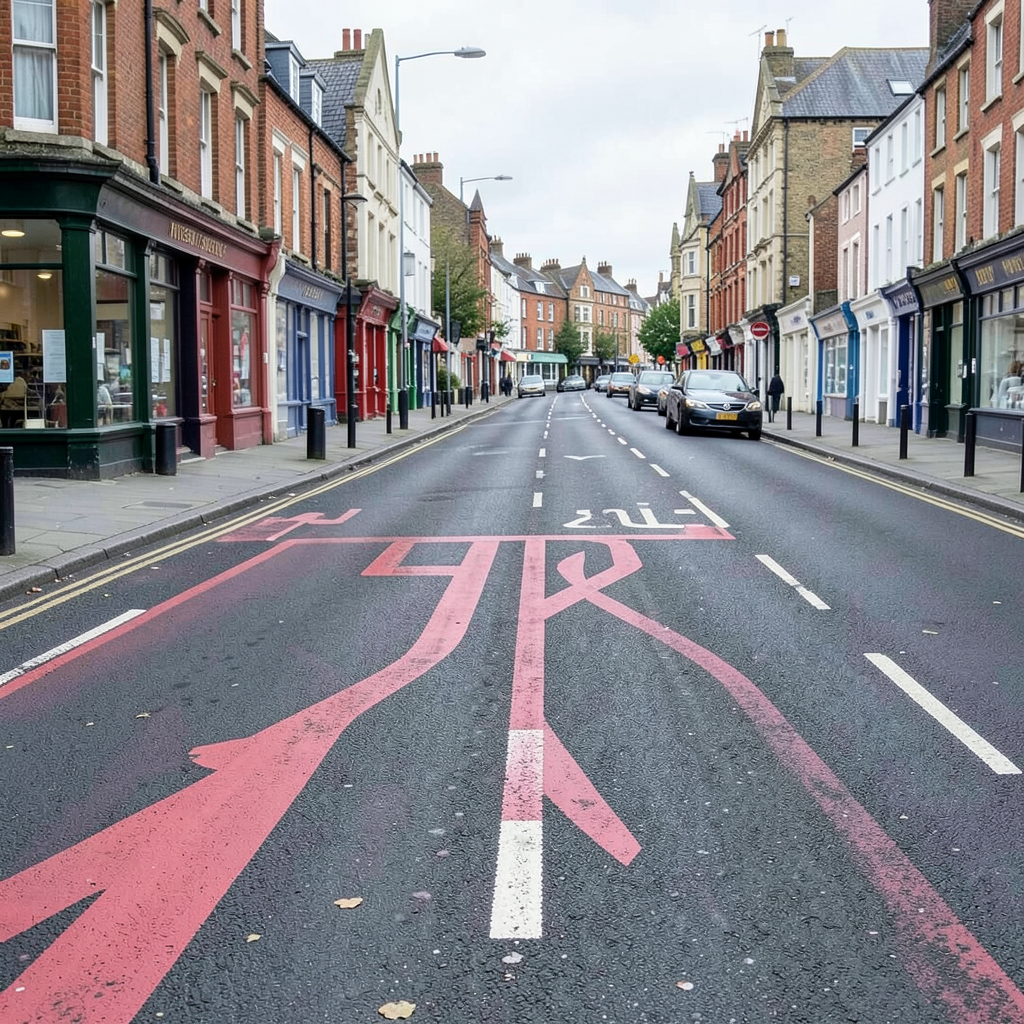

A proposal to transform Western Road into a designated rapid transit corridor faced scrutiny at Brighton and Hove City Council’s cabinet meeting on Thursday, as local traders and householders had indicated intentions to pursue legal proceedings.
Documentation presented to council leaders outlined how the original determination to design and establish a fast-moving traffic system along Western Road occurred in March the previous year.
Subsequently, in June, an experimental traffic regulation order received endorsement during a full council session.
Cabinet members received a briefing indicating that the authority had been served with a formal pre-action protocol communication and had submitted a response.
The briefing document clarified that the schemes fundamental objective centred on alleviating traffic bottlenecks and enhancing punctuality for bus services along this essential travel route.
Although the correspondence had not been made publicly available, elected members were requested to examine the concerns raised in the written notice.
A local authority figure responsible for transport and city infrastructure matters, who had previously expressed support for the initiative, withdrew from the relevant portions of the proceedings at Hove Town Hall.
The Labour administration leader at the council subsequently addressed numerous queries from fellow councillors and members of the public regarding the proposal, which had generated considerable controversy.
A representative of the Western Road Community Group referenced an assertion, featured in a council public statement but absent from the cabinet documentation, that bus transit durations had extended by 16.7 percent since 2015.
She sought clarification regarding the measurement standards that would determine whether the initiative had achieved its intended outcomes.
The council leader explained that while bus journey durations did not constitute the statutory basis for the scheme, the authority would observe traffic flow patterns to assess whether congestion diminished.
Another contributor observed that improvements to bus punctuality and dependability had formed part of the justification for the scheme, with all bus services directed through Western Road while other vehicles were directed toward the coastal promenade following a policy choice.
She noted that the coastal road suffered from insufficient public transport provision, with certain stretches running parallel to the proposed route lacking any service whatsoever.
Additional parallel corridors to the north could potentially benefit from more evenly distributed transit options, she suggested.
The council leader concurred that enhanced public transport coverage along the seafront merited consideration in subsequent planning but fell outside the scope of the current proposal.
A questioner asked what alternatives existed to a rapid transit designation, aside from deploying substantial personnel to ensure compliance with parking restrictions along double yellow line zones.
The council leader stated that parking enforcement along Western Road operated at significant levels, though many motorists departed when spotted only to return shortly thereafter.
Official documentation revealed that enforcement personnel had conducted 705 vehicle inspections along existing double yellow line markings between April and August of the current year.
Officers issued 684 penalty charge notices, while 2,315 vehicles departed before a notice could be lawfully served.
A concerned party inquired whether business owners would receive compensation for revenue lost during the total street closure lasting 45 days during the pre-Christmas trading period.
The council leader responded that statutory obligations required road maintenance, with scheduling arranged to avoid the peak summer season and vital Christmas commerce window.
She explained that reconstruction and resurfacing proved necessary due to substantial deterioration of the underlying foundations, which exceeded routine surface renewal requirements.
Postponement risked an emergency closure rather than managed work.
A representative from Brighton and Hove Buses, responsible for accessibility and community engagement, expressed that when implemented alongside suitable disabled parking, passenger drop-off points and sustained dialogue with impacted communities, rapid transit designations could contribute to a safer, more dependable and inclusive transportation network.
Such arrangements supported independent mobility for countless individuals dependent on daily bus services, including numerous disabled residents.
A representative from the Buswatch organisation questioned whether restaurants, retail establishments and property agencies required kerbside access for customer parking and goods delivery similar to major supermarket chains.
He observed that rapid transit schemes along Lewes Road and London Road appeared to be functioning effectively without detrimental consequences for nearby enterprises.
Those corridors featured clearly marked zones for loading, unloading and disabled parking.
Bus service reliability along those routes had improved due to smoother traffic movement.
The cabinet endorsed an experimental traffic regulation order authorising the implementation of a rapid transit corridor along Western Road between Montpelier Road in Brighton and Holland Road in Hove.
Following a 45-day complete street closure, the newly designated rapid transit route was anticipated to become operational.
Traders and residents were reported to be taking legal counsel to determine whether to contest the authoritys determination through judicial review proceedings.