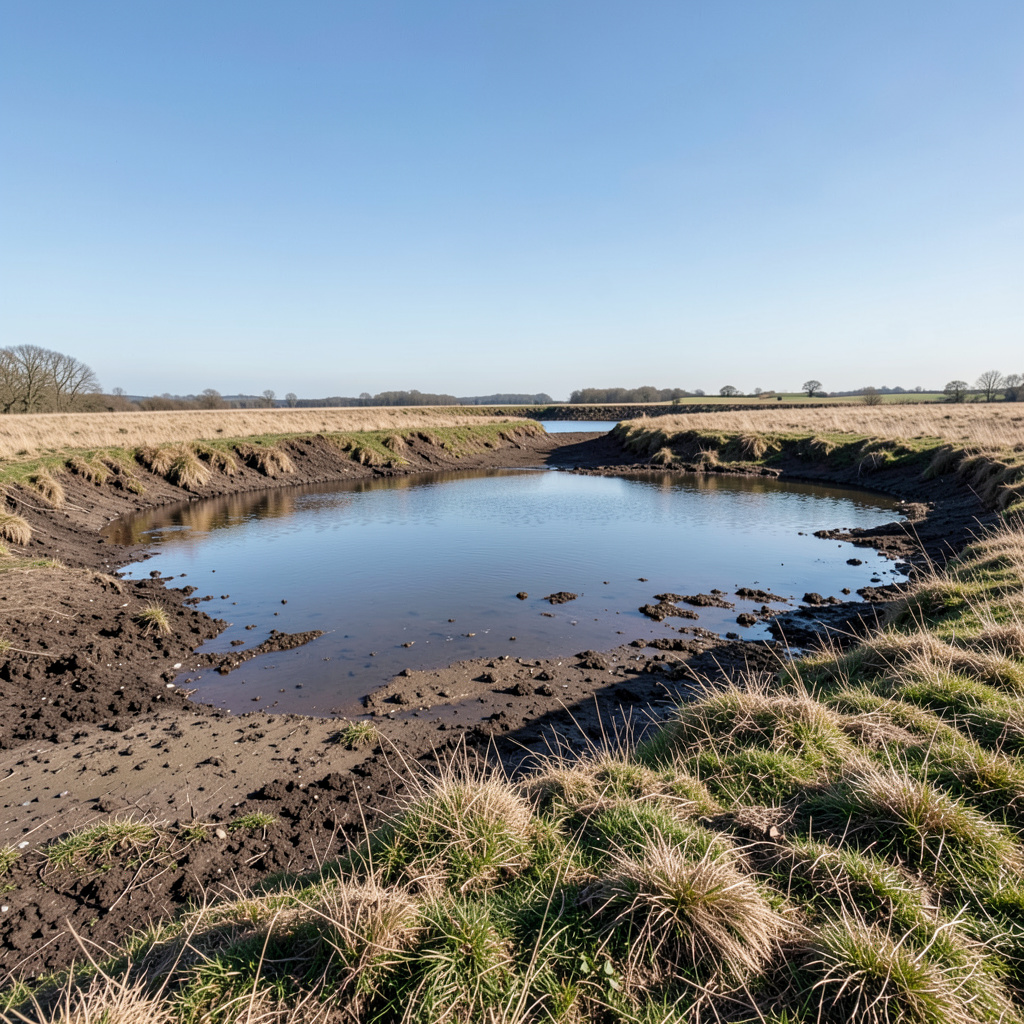

South East Water has received authorisation from the Environment Agency to modify its water release obligations at Ardingly Reservoir, located in West Sussex.
The regulatory body issued the drought permit as the reservoir reached its lowest capacity on record for the current season.
The facility supplies water to approximately 280,000 customers in the surrounding area.
Measurements taken on September 28 confirmed the reservoir contained just 23 per cent of its total capacity.
Under the terms of the authorisation, the volume of water released downstream to sustain the Shell Brook waterway, which feeds into the River Ouse, will be significantly reduced.
The arrangement lowers the standard daily discharge requirement from four million litres to one million litres per day.
This reduction is intended to preserve remaining reserves within the reservoir while still providing some flow to protect the affected waterway.
Richard O’Callaghan, environment planning manager at the Environment Agency, explained that the decision to issue any drought permit requires careful deliberation.
According to the agency, significant consideration is given to balancing environmental requirements against water supply needs.
Monitoring of river conditions will continue throughout the permit period.
Agency officials have stated that compliance with the permit conditions will be enforced, with measures described as stringent yet proportionate to the circumstances.
Authorities have cautioned that the drought permit represents only one element of a broader strategy.
Additional actions outlined in South East Water’s drought plan could become necessary, potentially including modifications to existing usage restrictions or the introduction of bans on non-essential water consumption.
The authorisation remains in effect for six months, expiring on March 29, 2027, unless the water company chooses to surrender it earlier.
Current forecasts from the Met Office indicate typical rainfall and temperature patterns are expected for October.
Officials have indicated that the winter period will prove decisive in determining whether water resources can recover sufficiently to move the region out of drought conditions by spring.
Achieving at least typical levels of winter precipitation will be essential for refilling the reservoir, while below-average rainfall would sustain pressure on water supplies.
The application for the drought permit was submitted by South East Water on August 28, with a public consultation taking place on September 18 to allow interested parties and objectors to present their views on the proposal.