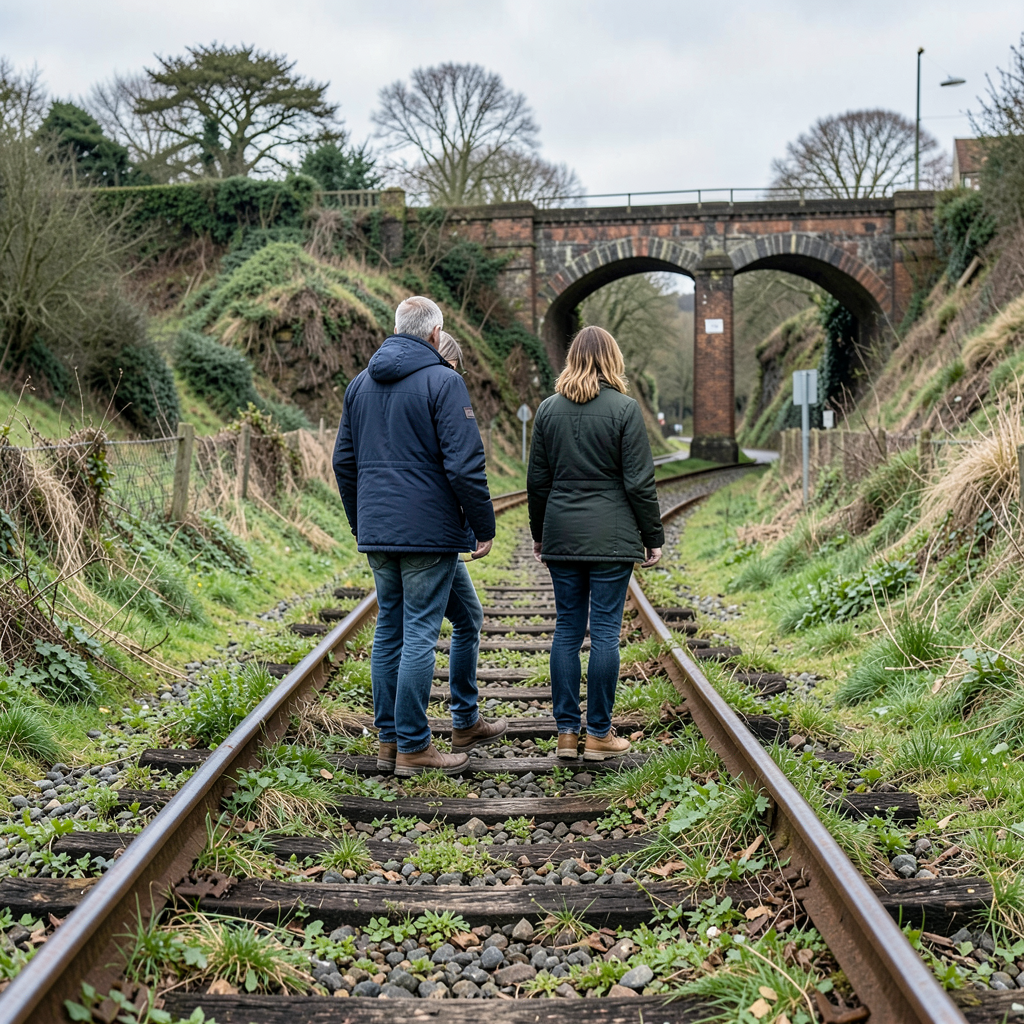

Proposals to revive two disused railway lines passing through West Sussex have been put forward by transportation advocates, who contend the schemes could significantly enhance connectivity across the region.
The initiative, submitted by the British Regional Transport Association, centres on restoring the historic Guildford to Horsham corridor through Cranleigh, which ceased operations during the 1960s as part of the nationwide cuts overseen by Dr Richard Beeching.
Advocates are additionally pressing for a feasibility examination of reinstating the longer-term connection between Horsham and Shoreham via Steyning.
The organisation asserts that reconstructing the 25-kilometre stretch between Guildford and Horsham could strengthen overall rail network dependability, reconnect isolated settlements, alleviate traffic congestion and emissions, and promote environmentally friendly modes of transport.
According to the group, the line might eventually integrate into an expanded east-west corridor serving Reading, Heathrow and western parts of London, extending through to Gatwick Airport and the Sussex coastline.
The concept envisions travellers making journeys between Gatwick, Horsham, Guildford and Heathrow entirely by rail, eliminating the requirement for automobile travel.
Cargo transport could similarly be shifted from crowded motorways onto the railway network.
The reopened route would function as a supplementary path to the heavily trafficked Brighton main line, enhancing punctuality throughout the broader railway system.
The association is also pushing for reconstruction of essential junction curves at Shalford, close to Guildford, and at Christ’s Hospital to optimise network connections.
Furthermore, supporters are requesting construction of a new rail curve at Arundel, which would join the Mid Sussex line with the West Coastway line heading towards Worthing and Brighton.
This intervention would establish direct rail services linking Horsham with coastal destinations while simultaneously increasing freight capacity.
Despite substantial sections of the original railway corridor having been consumed by construction and development, the association maintains that both proposed routes warrant formal examination as part of a comprehensive assessment of regional rail services.
The group acknowledges that realising either scheme would require considerable time and confront substantial obstacles related to construction, planning permission and financing.
Among the challenges highlighted are contemporary railway safety regulations, which favour underpasses and bridges over level crossings, thereby potentially escalating expenses considerably.
Advocates are simultaneously urging local authorities to safeguard former railway corridors from additional development pending completion of thorough viability assessments.
The organisation emphasises that any future reopening would need to reconcile railway service requirements with established pedestrian and cycling pathways that now occupy sections of the former track-bed.
The Rudgwick Double Bridge, previously a component of the Cranleigh line, now forms part of the Downs Link recreational route.
Significant portions of the historic Steyning line have similarly been incorporated into the Downs Link network.
The association is calling upon local councils, transport authorities and government departments to examine the commercial viability, engineering complexities, ecological implications and broader economic advantages of the proposals.
Backers maintain that the schemes could stimulate renewal along the South Coast, enhance access to harbours including Shoreham, and offer a more sustainable travel option for numerous journeys currently made by car annually.
Neither Network Rail nor Government ministers have publicly announced any formal proposals for reopening either line.