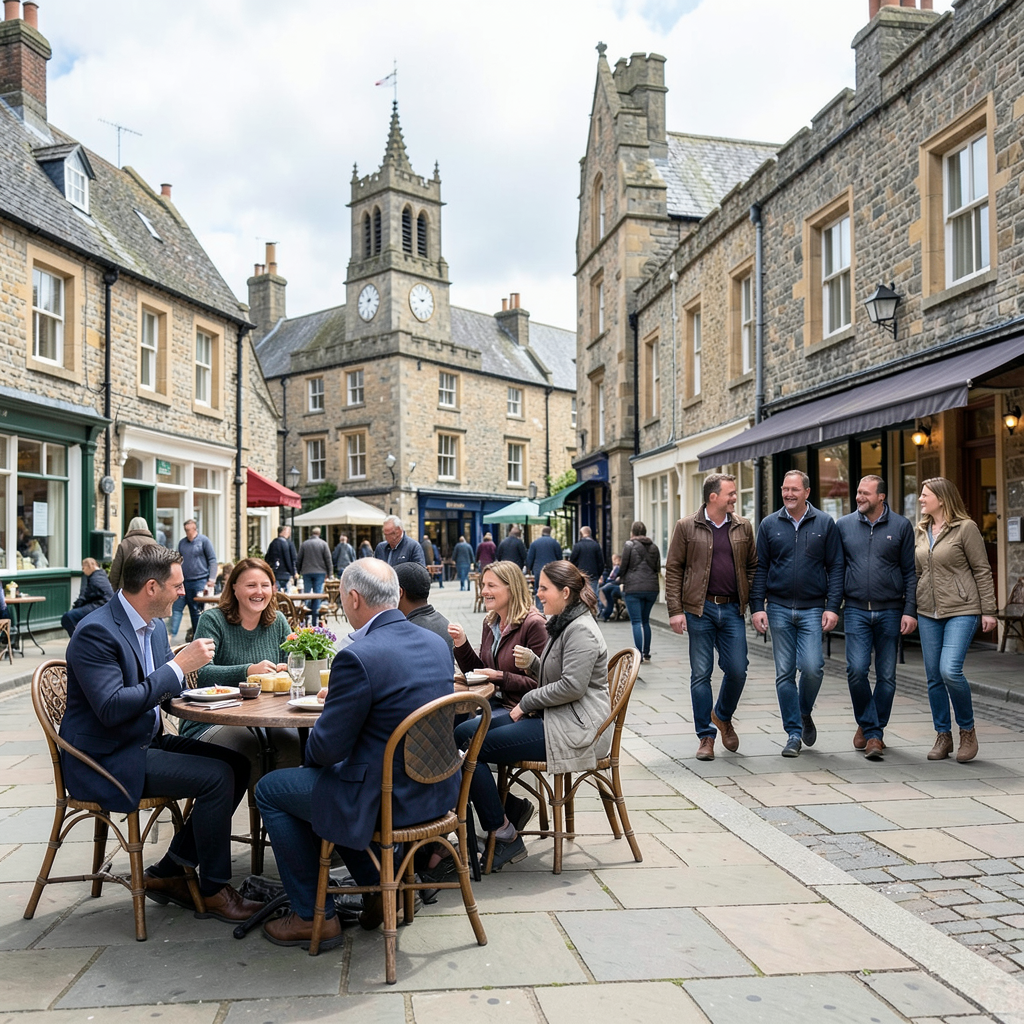

East Sussex is home to one of England’s most welcoming destinations, according to a recent compilation by travel platform World Atlas.
The county town of Lewes secured a place among the nine most hospitable towns across the country, with the travel resource highlighting its strong community spirit and vibrant programme of regular gatherings.
The selection criteria focused on towns where visitors receive a warm reception from the moment they arrive, with World Atlas noting that communities throughout Sussex, Kent, Hampshire and Wiltshire anchor their social lives around monthly markets, village halls and traditional public houses.
These locations represent the essence of English small-town hospitality, according to the publication.
Lewes earned particular praise for its thriving local scene and numerous opportunities for residents and visitors to engage with one another.
The town features a twice-monthly farmers market held on the first and third Saturday mornings, providing a direct connection between consumers and regional agricultural producers in the semi-rural setting of East Sussex.
A Friday food market operates from the Market Tower, offering another avenue for community interaction while supporting local growers and artisans.
Evening entertainment options include The King’s Head, which schedules regular events such as sea shanty evenings and open microphone nights, allowing attendees to enjoy performances or showcase their own talents.
The Riverside area along the River Ouse occupies a 17th-century structure that accommodates a chocolate emporium, café and additional retail offerings.
Several other Sussex settlements appeared alongside Lewes in the compilation, including Arundel, Burgess Hill and Steyning.
The local authority responsible for the area shared the recognition through its official communications channels.
Beyond market activity and hostelries, Lewes presents an eclectic range of attractions suitable for visitors across all age groups.
Regional tourism organisation Visit South East England characterised the destination as a handsome county town offering distinctive experiences with quintessentially Sussex character.
The commercial landscape features numerous independent retailers, antique dealers and unusual specialist outlets, drawing shoppers seeking alternatives to mainstream retail environments.
The town centre contains a functioning brewery, while its collection of historic public houses provides settings for dining and refreshment.
Anne of Cleves’ House allows exploration of domestic life during the Tudor and Elizabethan periods, with period room displays and a garden planted according to historical schemes using traditional botanical varieties.
Lewes Castle, constructed within decades of the Norman Conquest by William de Warenne, overlooks the historic streetscape below and provides commanding vistas of the surrounding area.
Grange Gardens occupy a former private garden attached to a 16th-century grange building, now opened as a public walled space bisected by the Winterbourne watercourse, featuring contemplative planting, a fountain and a decommissioned well.
Priory Park enables visitors to follow pathways once traversed by medieval monastic communities, with interpretative signage and a reconstructed herb garden showcasing botanical species employed historically for culinary, medicinal and ceremonial purposes.
The broader region offers further points of interest.
Ditchling Beacon, situated at the highest elevation in East Sussex, provides panoramas across the South Downs escarpment.
Drusillas Park, a compact zoological establishment, operates less than ten miles from the town centre.
The coastal resort of Eastbourne lies approximately fifteen miles distant, accessible via straightforward transport connections.