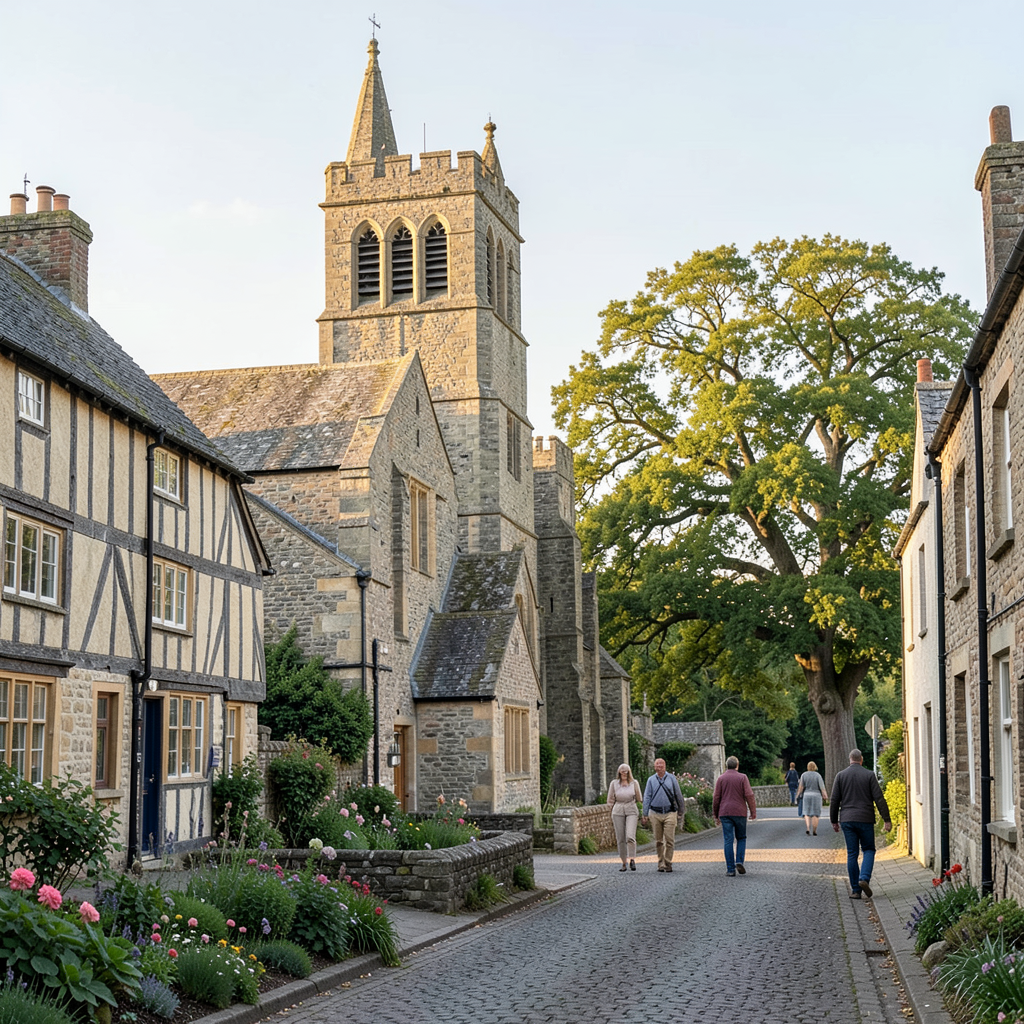

Cuckfield represents a picturesque settlement positioned within the West Sussex administrative area, specifically within Mid Sussex District.
The community occupies the southern incline of the Weald, situated to the northwest of Haywards Heath and in proximity to Burgess Hill.
The village embodies a harmonious blend of historical significance and community cohesion, consistently attracting visitors drawn to its traditional character and inviting environment.
The settlement’s origins trace back several centuries, with its nomenclature thought to derive from the cuckoo, a bird that serves as the village’s emblematic symbol.
Historically, Cuckfield functioned as a significant market centre and served as a notable coaching establishment along the historic route connecting London to Brighton.
The community received formal recognition through a charter granted in 1255, authorising the conduct of weekly market proceedings, a privilege subsequently affirmed by Charles II in 1670.
Archaeological evidence reveals the area’s considerable antiquity.
The skeletal remains of an iguanodon were uncovered on the elevated northern terrain, while investigations to the southern region have identified traces of Bronze or Iron Age habitation.
The parish church maintains an age of approximately nine centuries, while the former grammar school, ranking among the nation’s earliest educational institutions, originated during Henry VII’s reign.
The principal thoroughfare features dwellings constructed during the sixteenth century, and multiple public houses preserve connections to the village’s era as a bustling coaching destination.
Queen’s Hall, constructed in 1897 to commemorate Queen Victoria’s Diamond Jubilee, presently accommodates the parish council administrative offices alongside the village’s museum facility.
Visitors to Cuckfield discover an assortment of historical landmarks, natural landscapes, and communal activities.
The surrounding terrain provides extensive opportunities for walking expeditions, with the village serving as an ideal departure point for countryside explorations.
Notable attractions encompass St Wilfrid’s Church, distinguished by its prominent tower and tranquil churchyard grounds, and Ockenden Manor, an Elizabethan manor house presently operating as an upscale hotel and spa establishment.
Cuckfield Park offers nature enthusiasts a historic deer park characterised by veteran trees and scenic panoramas.
The principal commercial district features independent retailers, dining establishments, and public houses, many retaining historical associations with the coaching trade era.
The community maintains robust local traditions and maintains a diverse programme of annual celebrations, including the Cuckfield Music Festival and Bonfire Night gatherings.
Accommodation provisions range from traditional bed and breakfast establishments to the five-star Ockenden Manor facility.
The village claims association with the entertainment industry through Jamie Theakston, a prominent radio and television personality who entered the world in Cuckfield.
The broadcaster gained particular recognition for co-presenting the Heart Radio national breakfast programme alongside Amanda Holden, while also delivering content across BBC, ITV, Channel 4, and Channel 5 platforms.
Between 1996 and 1999, he co-hosted the BBC One children’s programming Live and Kicking alongside Zoe Ball, subsequently assuming presenting duties for Top of the Pops during the period spanning 1998 to 2003.
His documentary work encompassed narrating the BBC series Traffic Cops from 2003 until 2015, continuing in that capacity with Channel 5 from 2016 onward.
Despite pursuing his broadcasting career throughout Britain, Theakston’s Cuckfield origins remain a source of local pride.
The settlement successfully preserves its historical legacy while maintaining contemporary relevance.
Medieval foundations and sixteenth-century architectural elements coexist alongside vibrant annual festivals and thriving independent commercial enterprises.
Accessible countryside rambles, heritage locations, and an engaging schedule of community activities continue to appeal to visitors across age groups, while the village simultaneously serves as a cherished residence for its permanent population.