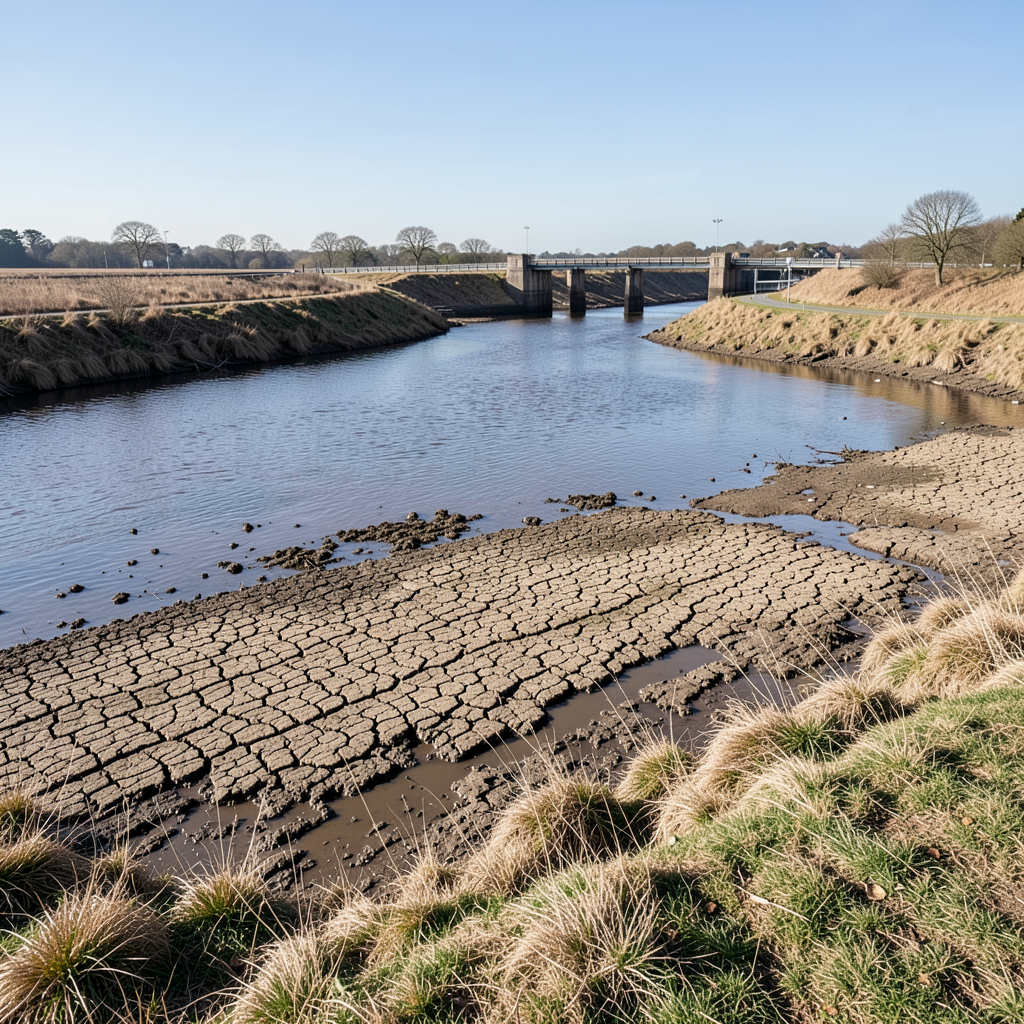

Significant drought conditions have been officially confirmed across multiple counties in southern England following an extended period of exceptionally low rainfall.
The severe drought classification applies to portions of East and West Sussex, along with sections of Cornwall, Devon, Dorset and Somerset.
The announcement follows official assessments indicating that the South East and South West regions recorded their lowest precipitation levels between April and September in over one hundred years.
A severe drought designation indicates that water scarcity has begun impacting everyday activities and natural environments substantially, with potential for prolonged consequences affecting agricultural operations, residents, local communities, economic activity and ecosystems.
Utility providers managing water distribution have been instructed to intensify their drought preparedness measures as authorities work to maintain public water supplies throughout the affected regions.
The affected area has endured some of its driest conditions in more than a century, with government officials emphasising that the severity of the situation has not been witnessed in decades.
The pressure on water resources has been considerable throughout this period.
Government representatives confirmed that household water supplies would remain operational, though declaring a severe drought enables preventive action to be implemented before any service interruptions develop.
Water companies have been directed to implement daily assessments of reservoir and river water levels alongside enhanced water quality surveillance.
The Environment Agency will expand its monitoring activities to verify that businesses holding water abstraction licences are only withdrawing permitted quantities.
The regulatory body has also been instructed to focus resources on safeguarding community water supplies in drought-affected zones, even where this may require temporary adjustments to environmental regulations, thereby allowing water companies to retain additional water in depleted storage facilities.
The formal declaration has been driven primarily by concerns regarding Ardingly Reservoir, where water volumes have fallen dramatically below seasonal norms.
This facility provides water to approximately 95,000 connections managed by South East Water, serving Haywards Heath, Uckfield and neighbouring communities.
Current water levels stand at merely 19 per cent of total capacity, significantly below the 75 per cent level typically expected during this season.
The Environment Agency’s chief executive, Philip Duffy, stated that unprecedented summer temperatures combined with drought conditions have placed extraordinary strain on water reserves.
He noted that restoration of normal conditions depends both on precipitation and consumption levels.
While weather patterns remain beyond control, water companies possess the ability to take immediate action.
The agency expects these companies to activate their drought contingency plans and implement necessary measures to ensure continued public water availability.
The public is also being asked to reduce water consumption, which would preserve greater volumes in rivers and natural environments, benefiting agricultural operations and supporting wildlife populations.
The Environment Agency has approved South East Water’s application for a drought permit, authorising a reduction of three million litres daily in the amount of water released from Ardingly Reservoir into the River Ouse.