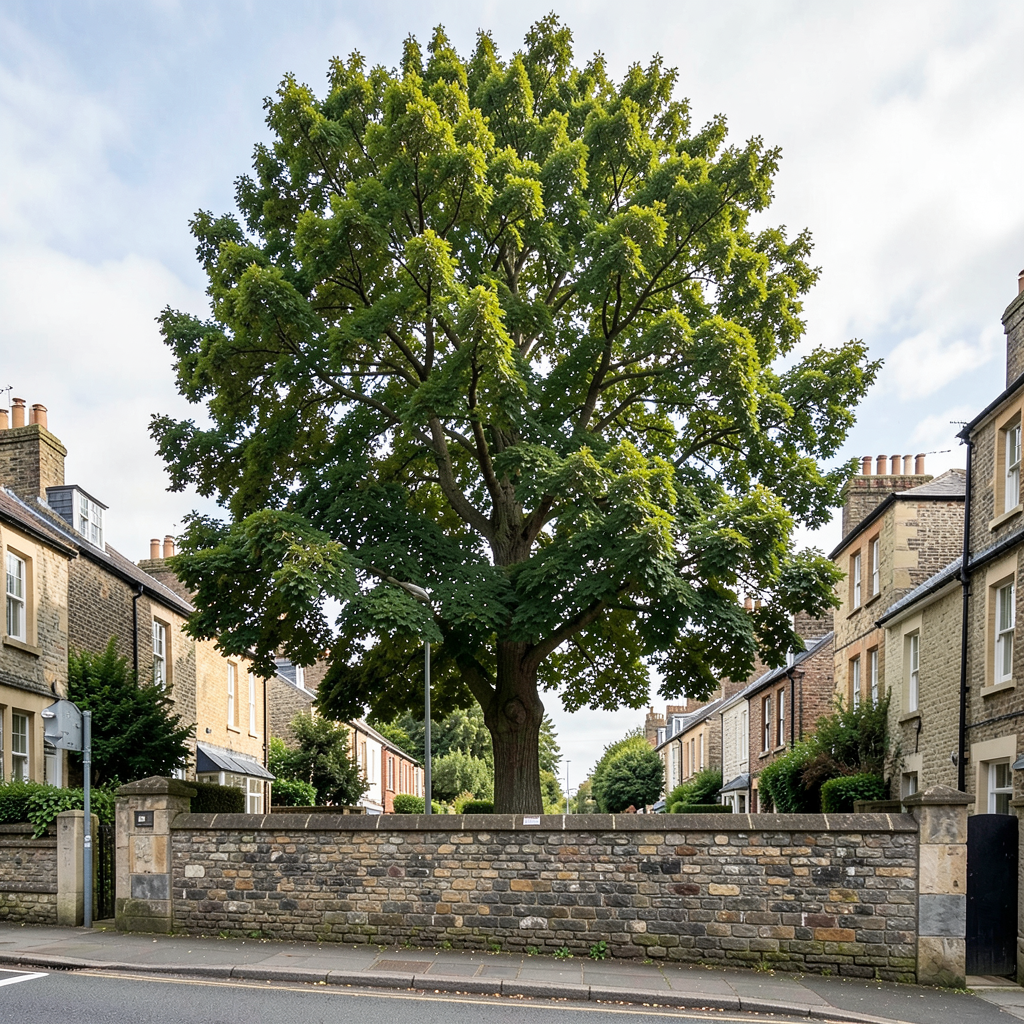

A mature elm tree in Brighton faces potential removal despite council documentation indicating that structural deficiencies in a nearby retaining wall, rather than the tree alone, may have caused damage to a property in the Preston Park area.
Brighton and Hove City Council is seeking public input on proposals to fell the elm located outside a property in Inwood Crescent.
A resident has attributed significant cracks and wall movement to the tree’s root system.
However, documentation secured by The Argus reveals that insurers acting for the council were informed the damage resulted from multiple factors, including inherent flaws in the wall’s design and construction methods.
An individual who wishes to see the tree preserved stated that the elm possesses substantial remaining lifespan and represents a valuable component of Brighton’s collection of elms, which holds national importance.
According to discussions within the council, removing the tree and constructing a replacement wall would cost approximately £34,000, substantially less than the £60,000 required for engineering works designed to retain the elm.
The source indicated that the more economical option disregarded underlying structural weaknesses present in the existing wall.
An engineering evaluation conducted on behalf of the council’s insurers determined that the retaining wall lacked appropriate weep holes and drainage provisions, permitting groundwater to accumulate and exert pressure against the structure.
The assessment noted that such pressure could result in gradual movement and cracking.
Investigators additionally identified fractured brickwork and frost deterioration associated with elevated moisture content.
The report acknowledged that roots from nearby trees, including the elm, may have played a role in the damage but did not attribute responsibility exclusively to the tree.
The document indicated that the impact of root systems and groundwater pressure proved difficult to differentiate.
The public consultation notice currently advertised does not reference these findings nor does it outline engineering alternatives that might enable the tree’s preservation.
A separate liability assessment concluded that tree roots potentially made a significant contribution to the damage but noted the wall suffered from fundamental design and construction shortcomings regardless.
Correspondence between council officers, insurance representatives and legal counsel characterised the disagreement as an unclear situation involving two identifiable causes: the defective wall and the adjacent tree.
The loss adjuster identified evidence of substandard design and construction while accepting that the tree may have contributed to the damage.
Notwithstanding the inconclusive nature of the evidence, insurers recommended that the council consider removing the elm to mitigate risk and proposed dividing any settlement equally between both parties, acknowledging the wall’s structural deficiencies.
Councillor Alan Robins, cabinet member for sport, recreation and libraries at Brighton and Hove City Council, explained that the public notice was designed to facilitate consultation with residents regarding the proposal to remove the tree and would not encompass details of insurance liability discussions.
The consultation forms part of the decision-making process alongside additional evidence.
All pertinent information, including the conclusions drawn by the council’s loss adjusters, estimated expenses for preserving the tree and possible engineering solutions, will be presented to and evaluated by those with delegated decision-making authority prior to a final determination.
The council intends to examine its consultation methodology and obtain guidance on whether supplementary information ought to be incorporated.