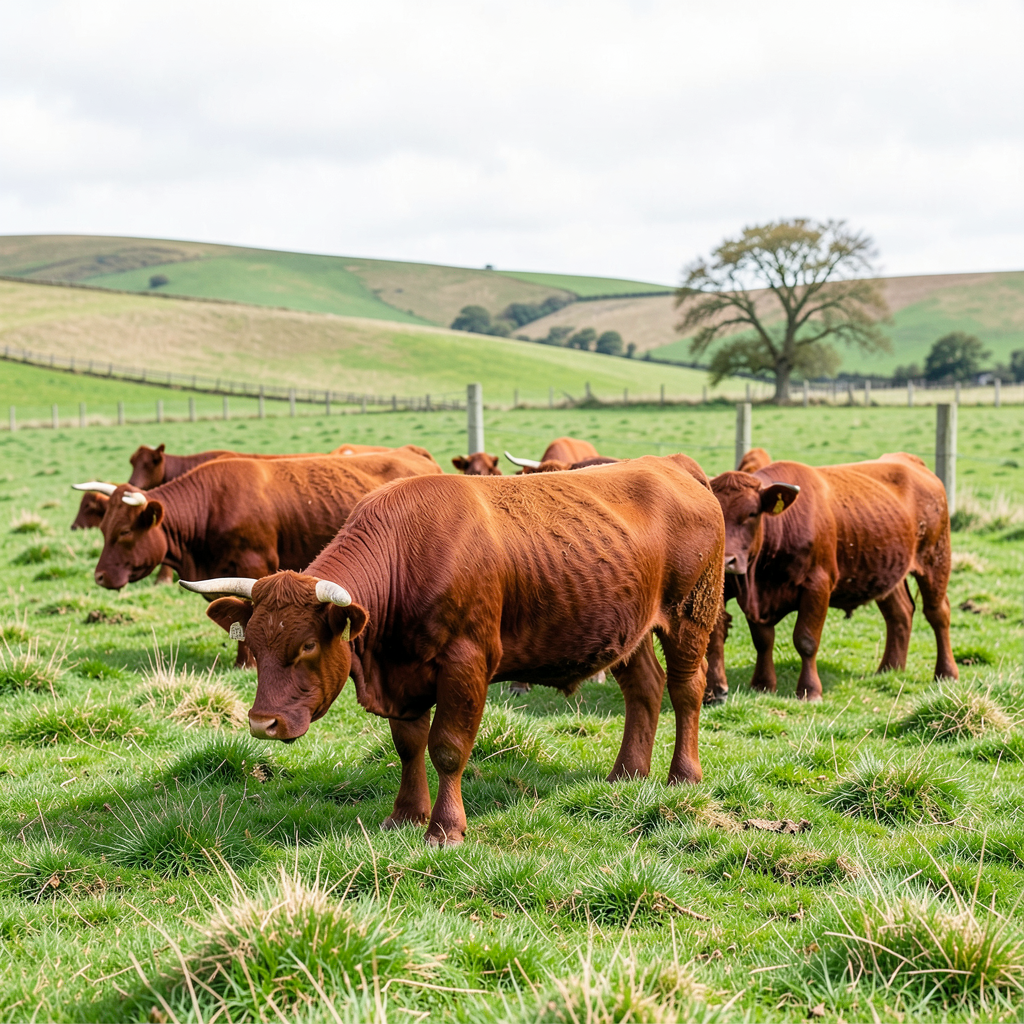

The deep-red cattle commonly seen grazing across British fields represent one of the nation’s oldest native breeds, yet their qualities extend well beyond their distinctive appearance.
Jayne Duveen operates Jacobs Ladder Farm and has devoted more than 25 years to raising Sussex cattle.
The breed was originally selected during her time farming in Chelwood Gate.
According to her, the ancient breed thrives on heavy clay soils, damp lowland areas and permanent pasture land.
The animals are not selective about their diet and prove highly efficient foragers.
Sussex cattle are frequently characterised as thrifty animals capable of maintaining excellent physical condition on grazing land that other breeds might find unsuitable.
Their robust constitution, sturdy legs and black hooves make them particularly adapted to outdoor living on the wet, heavy soils typical of Sussex.
For Ms Duveen, this alignment between breed and landscape proved decisive.
She advocates keeping livestock in conditions that mirror their natural existence, permitting them to graze and behave according to their instincts.
The temperament of the animals constitutes another quality she values highly.
She noted that the breed possesses a notably calm disposition and excels at motherhood.
Calving typically occurs without assistance, with cows giving birth outdoors unassisted.
Selecting the appropriate breed for specific terrain encompasses more than achieving quality beef production.
It also involves working in harmony with the natural attributes of the animals themselves.
The Sussex beef available from The Sussex Peasant originates from cattle raised entirely on pasture, fed on grass and forage rather than grain.
This unhurried approach to agriculture yields meat with exceptional flavour.
Ms Duveen’s extensive experience spanning two decades with the breed confirms her assessment of the results.
She stated that the combination of this breed, its diet and its lifestyle produces some of the finest beef she has ever encountered.
When the underlying ingredient meets such high standards, maximising its potential becomes worthwhile.
Fillet and sirloin remain popular choices, though brisket, shin and chuck offer equally satisfying options.
Slow cooking these cuts with onions, stock and local ale produces richly flavoured, comforting dishes.
Cuts that lack fashionable appeal frequently deliver the most gratifying eating experience.
Employing this approach also enables consumers to derive greater value from responsibly raised beef.
Purchasing quality meat does not necessitate selecting the priciest cut, and slow cooking methods extract excellent flavour and value from the entire carcase.
Ms Duveen has expressed her appreciation for what these animals provide.
Sussex cattle form part of British farming heritage while remaining actively present in contemporary agriculture.
Those who have not yet sampled native Sussex beef may find autumn an ideal introduction to the breed’s qualities.