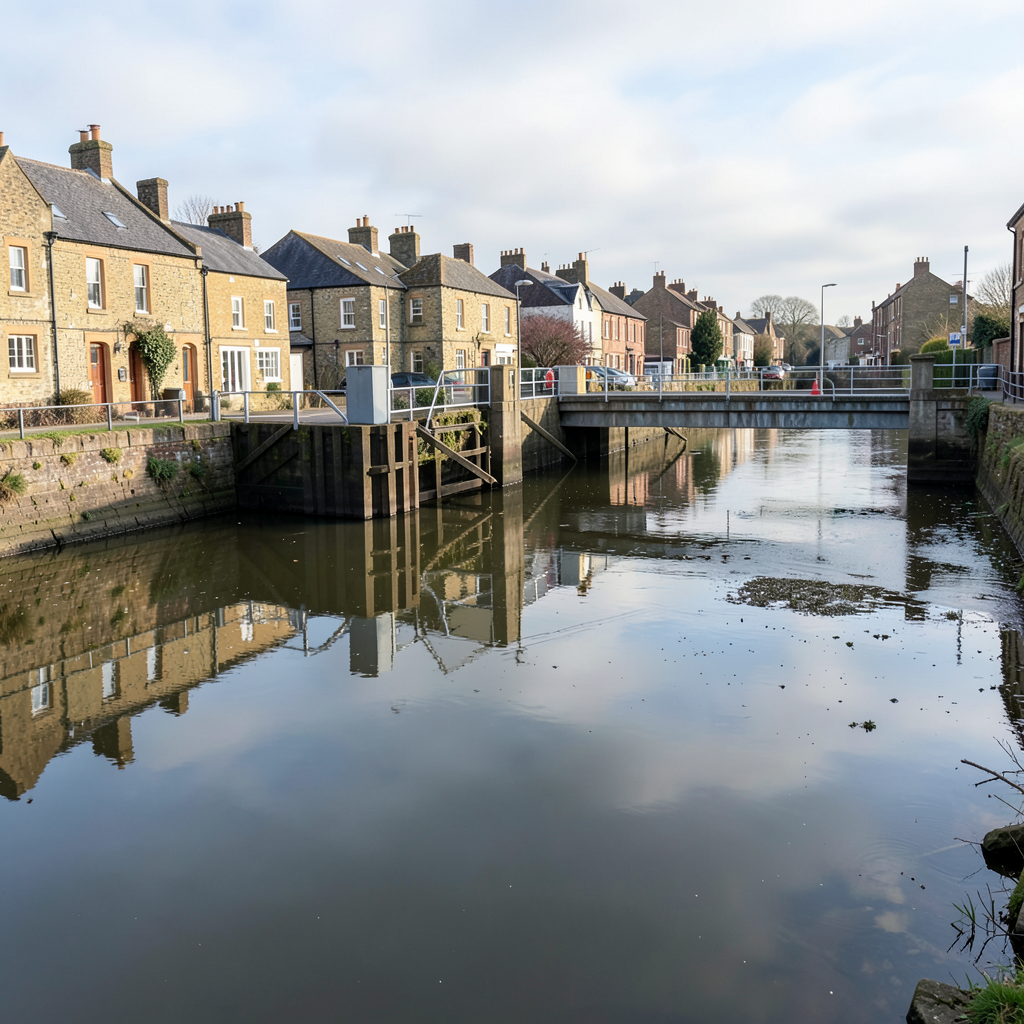

A newly published study has outlined seven measures aimed at lowering flood vulnerability in Lewes while strengthening protections for inhabitants and commercial enterprises.
The suggestions come in the aftermath of commemorative activities staged in 2025 to observe the quarter-century milestone since catastrophic flooding struck the town and surrounding communities including Uckfield in October 2000.
Lewes Town Council coordinated the initiative alongside partner organisations, convening sessions that gathered input from local residents, business operators, and technical specialists to examine the devastating events of 2000 and develop strategies for averting comparable catastrophes.
Juliet Oxborrow, who compiled the document and serves as co-director of Lewes Climate Hub, explained that the initiative’s significance lay in bringing forward practical measures to address flooding concerns, drawing upon proposals put forward by community members alongside recommendations from specialists in flood management, emergency response, and environmental protection.
She noted that numerous suggestions within the study originated from residents eager to see meaningful progress implemented.
Given the historical precedent of significant flooding occurring in Lewes at intervals of approximately three to four decades, she emphasised the urgent need for coordinated action involving community groups, municipal authorities, and relevant agencies.
Contributions were received from more than 1,200 individuals through workshops, questionnaires, and a display staged by Friends of Lewes.
The resulting publication consolidates these diverse perspectives into seven recommendations organised across five distinct areas, with particular focus on solutions working with natural systems rather than solely relying on artificial defences.
Sussex has pioneered natural flood management approaches since 2012, with Lewes District Council providing financial backing for interventions including temporary barriers designed to slow water flow and restoration of wetland environments.
The study advocates expanded deployment of nature-based flood mitigation measures, a unified effort to combat flooding caused by surface water accumulation, and restriction of any new construction on the Lewes floodplain to developments capable of withstanding flood conditions.
Councillor Dr Wendy Maples, who oversaw the Lewes Floods 25th Anniversary initiative on behalf of Lewes Town Council, highlighted that strengthening community preparedness remained paramount.
The commemorative activities and resulting publication demonstrated how grassroots schemes supported at local level could effectively involve and equip residents, ranging from simple measures such as fitting water collection containers and creating gardens designed to absorb rainfall, to ensuring proper disposal practices that prevent drainage blockages, and ensuring familiarity with designated emergency shelter locations alongside preparation of essential emergency supplies.
The commemorative programme received backing from Lewes Town Council, Chalk Cliff Trust, and Lewes District Council.
Financial support for the publication was supplied by the Sussex Resilience Forum.