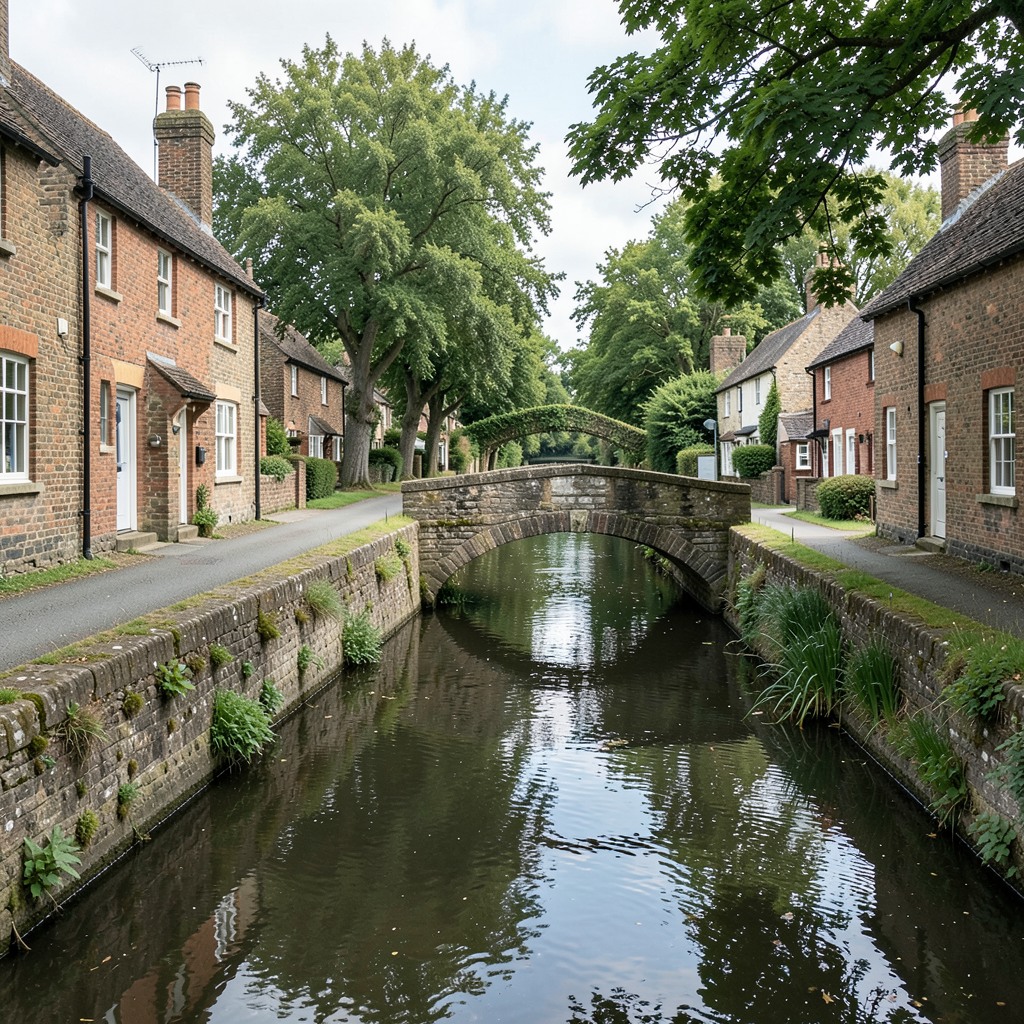

Billingshurst, a historic settlement in the heart of the Sussex countryside, represents a traditional English village setting.
The village, situated within the Horsham district of West Sussex, occupies a strategic position at the intersection of the A29 and A272 roads.
The settlement, home to approximately 10,000 inhabitants, has preserved its traditional character while serving as a functional part of modern West Sussex.
The village’s origins trace to ancient times, established along the route of Stane Street, a Roman highway linking London with Chichester.
Although archaeological evidence of Roman occupation remains absent, the village coat of arms commemorates this legacy with a depiction of a Roman soldier.
The earliest documented settlement emerged during the Saxon period, bearing the name of a local landowner known as Billa, with the first records appearing more than twelve centuries ago.
In the early nineteenth century, Billingshurst gained renewed significance as a pivotal waypoint along the Wey and Arun Canal.
This engineering achievement, often referred to as London’s forgotten maritime route, facilitated the passage of seagoing vessels as far inland as Newbridge Wharf.
The waterway’s extension to Godalming in 1816 re-established a direct navigational connection between the village and the capital.
Significant portions of the canal have undergone restoration in recent decades.
Seasonal boat trips operate along the waterway, and the historic towpath now attracts walkers.
Despite continued traffic along the A272, the village centre preserves numerous period structures.
Travel platforms highlight Billingshurst as a destination, noting its unspoiled village atmosphere, accessibility to natural landscapes, and strong communal identity.
The settlement offers a relaxed lifestyle with essential amenities for those seeking a traditional countryside retreat.
The main commercial thoroughfare features independent retailers, traditional pubs, and eateries.
The surrounding countryside contains public footpaths, wine producers, and heritage sites.
Its construction incorporates local flint materials and features a prominent tower, with interior elements reflecting centuries of religious heritage.
The adjacent South Downs National Park provides extensive opportunities for outdoor recreation.
Established routes traverse diverse terrain including heathland, river corridors, and forested areas.
Popular walking destinations include Pulborough Brooks, Kirdford, and Wisborough Green.
Family-oriented attractions in the vicinity encompass Fishers Farm Park in Wisborough Green, offering interactive animal encounters, adventure facilities, and seasonal programming.
Sumners Ponds, situated just beyond the village boundaries, features angling facilities, a waterside refreshment venue, and woodland trails suitable for camping and alternative accommodation experiences.
The region has developed a reputation for viticulture, with establishments such as Kinsbrook and Nutbourne providing wine tasting experiences, estate tours, and dining options showcasing local produce.
In the nearby village of Kirdford, The Half Moon public house has attracted considerable attention following its renovation in 2017.
The establishment, under the stewardship of model and media personality Jodie Kidd, occupies a fifteenth-century structure bearing Grade II protected status.
The venue’s promotional materials position it as suitable for daytime dining and small-scale evening occasions.
Its interior presents a traditionally styled restaurant alongside a bar with hunting lodge-inspired design, opening onto a south-facing terrace adjacent to herb and vegetable gardens.
Seasonal menus emphasise produce sourced from the venue’s own gardens.
Review platforms recorded an overall rating of 4.1 out of 5 for the establishment.
Customer responses highlighted discreet yet attentive service, the quality of food and drink offerings, and distinctive decorative details such as complimentary water and bills presented in mid-twentieth century nature publications.
One assessment noted the venue’s appeal for those prepared to travel considerable distances, while another suggested it deserved recognition comparable to major culinary accolades.