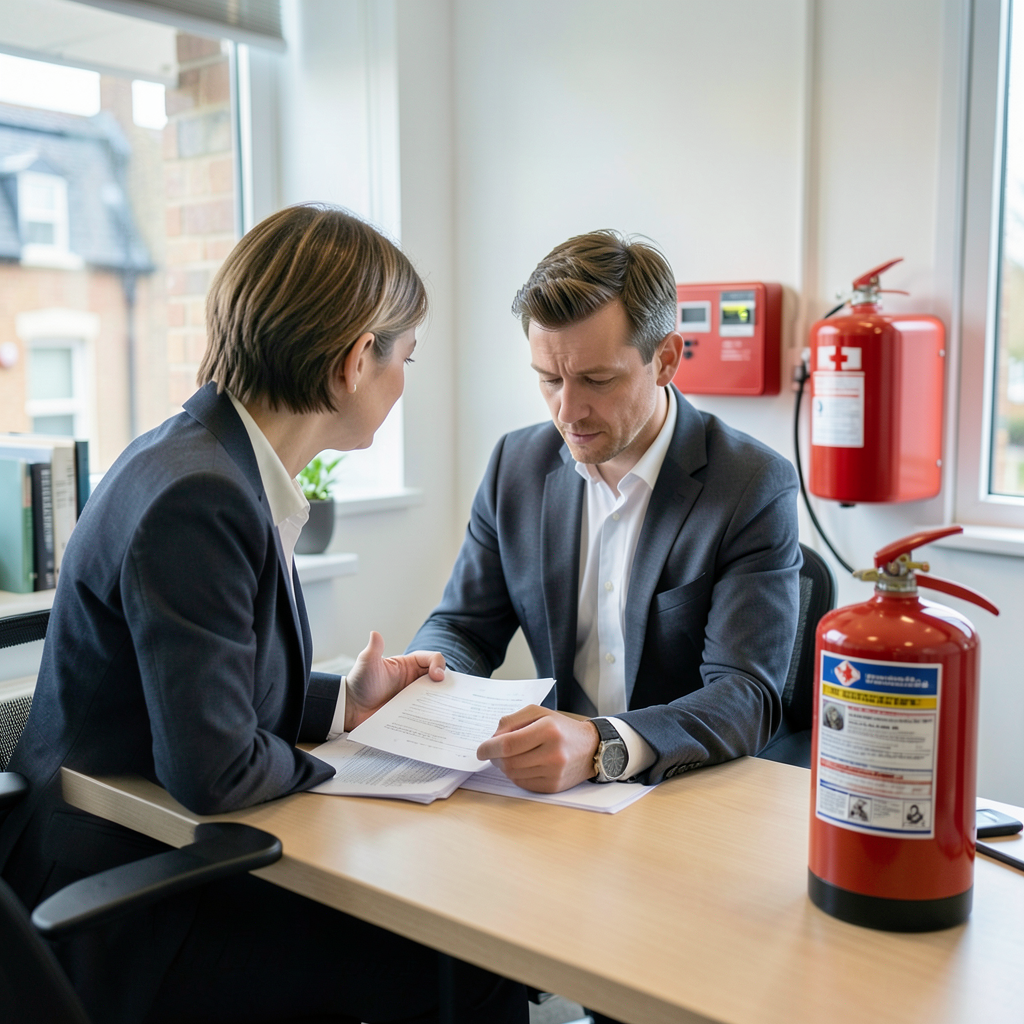

The scale of workplace accidents and illness across Britain has prompted calls for Brighton companies to evaluate their approach to risk management.
Fresh data published by the Health and Safety Executive reveals the continued prevalence of occupational injuries and health conditions affecting the national workforce.
Official statistics indicate that approximately 680,000 employees sustained non-fatal injuries during the 2024/25 reporting period.
An additional 1.9 million workers experienced work-related health problems, while combined workplace injuries and ill health accounted for roughly 40.1 million lost working days annually.
The economic burden on enterprises and the broader economy reached an estimated £22.9 billion for 2023/24, according to HSE projections.
Industry professionals contend that these figures underscore the necessity of maintaining active risk management frameworks within business operations.
Common Hazards Persist in Work Environments Analysis of incident data reveals that certain categories of accidents continue to occur frequently.
RIDDOR reports from 2024/25 show that slips, trips and falls on level surfaces represented 30 percent of non-fatal injuries formally reported by organisations.
Manual handling incidents involving lifting or carrying comprised 17 percent of cases, while collisions with moving objects and violent incidents each accounted for 10 percent.
Falls from elevated positions contributed a further 8 percent to the total.
Irrespective of sector-specific risk profiles, organisations bear a legal obligation to comprehend potential hazards their workforce may face and implement suitable control measures.
Guidance from Brighton and Hove City Council emphasises that hazard evaluation constitutes a fundamental component of robust occupational health and safety practice.
Companies with five or more staff members must formally document the principal findings of their risk assessments, including the methods employed to mitigate identified dangers.
Risk Assessments Must Adapt to Business Evolution Representatives from the occupational safety sector highlight that organisations frequently encounter difficulties ensuring their assessments accurately mirror actual workplace conditions.
The nature of commercial operations shifts continuously.
Introduction of new machinery, redistribution of employee duties and modifications to working methods can all modify the risk landscape.
Each such development necessitates a review of existing protective measures.
Alterations to equipment, procedures, personnel and physical surroundings may introduce novel hazards or intensify pre-existing ones.
Systematic reassessment enables enterprises to pinpoint areas requiring updated documentation prior to any incident occurring.
Enhanced Documentation Supports Risk Oversight Organisations operating across numerous sites or involving multiple supervisors and workers often find risk assessment management increasingly complex.
Documentation may exist across various paper records, spreadsheet files and separate software platforms.
This fragmentation complicates tracking outstanding issues and prevents decision-makers from obtaining a comprehensive view of organisational risk exposure.
Digital solutions can offer a more organised method for recording hazard evaluations, cataloguing control measures and preserving audit trails of reviews conducted.
Experts emphasise that technological tools should complement rather than supplant the expertise of individuals responsible for workplace safety.
Successful risk management ultimately relies on personnel possessing thorough familiarity with their operational environment.
Digital platforms can consolidate information, allowing managers to ascertain what hazards have been identified, what remedial actions have been implemented and where further attention remains necessary.
This capability proves especially valuable as companies expand and the volume of assessments, sites and personnel grows.
Personnel Development Remains Essential Hazard evaluations represent merely one facet of comprehensive safety management systems.
Staff members additionally require adequate information, guidance and instruction enabling them to comprehend workplace dangers and the protective measures established for their benefit.
Supervisors must possess sufficient expertise to determine when evaluations warrant revision and how employee-reported issues should be addressed.
Workers themselves can offer valuable insights regarding workplace hazards.
Brighton and Hove City Council advocates for organisations to include staff members in the assessment process, given that employees typically possess detailed awareness of their specific job functions and associated risks.
Establishing transparent procedures for workers to communicate concerns can contribute to a preventive safety strategy.
Occupational Injuries Continue Affecting Enterprises The most recent statistics illustrate the magnitude of challenges confronting organisations.
Of the roughly 680,000 workers sustaining non-fatal injuries during 2024/25, around 124,000 suffered harm necessitating more than a week away from work.
Employers formally reported 59,219 non-fatal injuries to employees under RIDDOR provisions.
Preliminary figures for 2025/26 indicate that 126 workers died in work-related incidents throughout Britain.
The construction sector recorded the highest mortality count at 25, followed by agriculture, forestry and fishing with 22 fatalities.
Falls from height remained the leading cause of occupational death, responsible for 31 fatalities.
Emphasis on Prevention Should Prevail For Brighton enterprises, meaningful risk management extends beyond conducting assessments to satisfy regulatory requirements.
Organisations must identify hazards, establish appropriate controls, deliver relevant training and continuously evaluate whether implemented measures retain their effectiveness.
Maintaining current assessments also provides enterprises with improved documentation demonstrating how workplace hazards have been recognised and addressed.
Safety professionals note that the fundamental aim involves detecting and managing risks prior to any individual sustaining harm.
While eliminating every conceivable danger remains impossible, organisations can ensure they possess a methodical system for hazard identification, assessment review and responsive action when issues emerge.
Integrating such practices into routine business operations equips companies with a substantially more robust preventive framework compared to reacting after incidents expose deficiencies.