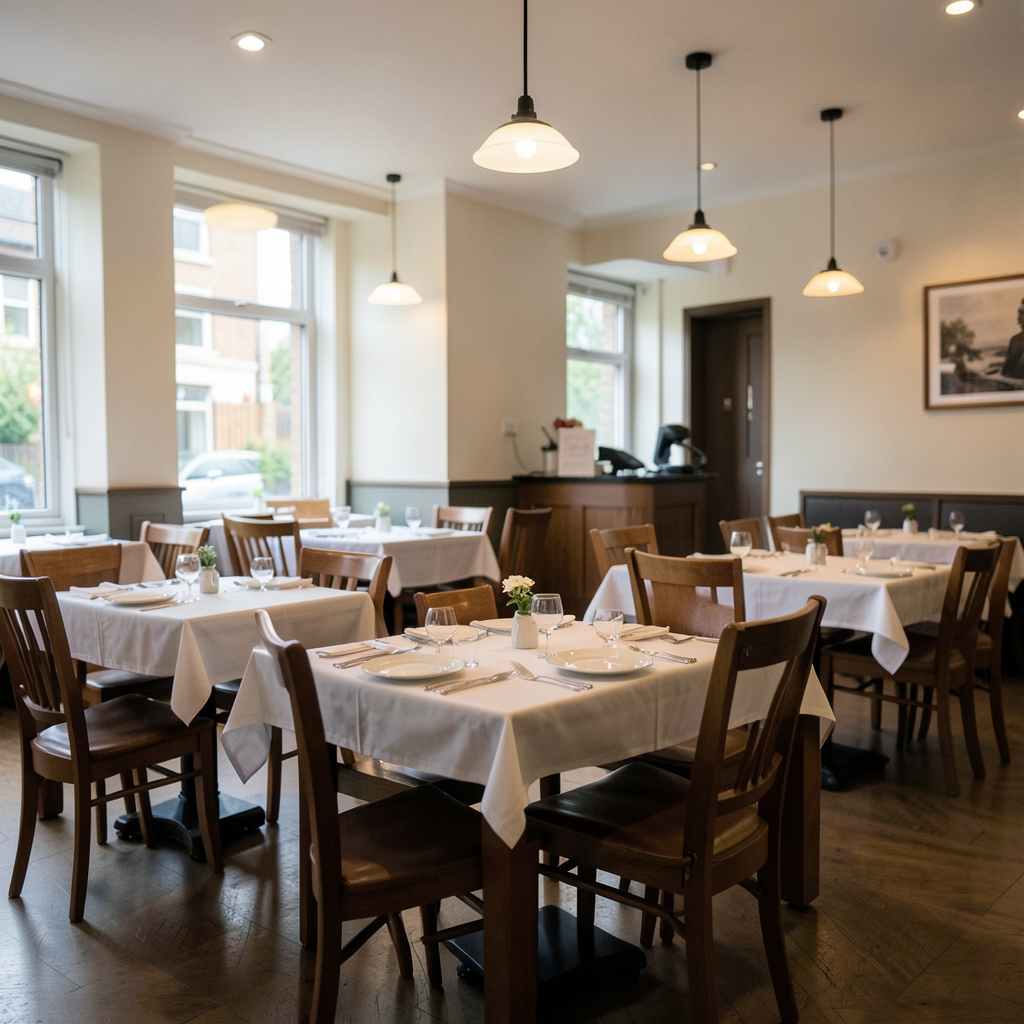

A shuttered dining establishment in Sussex is poised to resume operations under fresh management after narrowly avoiding permanent shutdown.
Whitbread announced the closure of 261 outlets throughout the United Kingdom last month following the retirement of multiple hospitality concepts.
The affected brands comprised Brewers Fayre with 89 sites, Beefeater encompassing 106 locations, Bar + Block totalling 20 venues, Table Table with 32 establishments, and Cookhouse + Pub accounting for 14 sites.
However, acquisition deals have preserved 110 of these former establishments.
Queensway Inns and Common Table Group have secured these properties and intend to relaunch them with renovated branding.
Queensway Inns has obtained 53 of the former Whitbread locations, with intentions to transform them into budget-friendly pub operations.
The company indicated that approximately 900 staff members could transition into fresh positions as part of the revival initiative.
Common Table Group, a recently formed hospitality enterprise, disclosed earlier in the week that it had secured 57 sites alongside one Premier Inn hotel.
Thomas Anderson, the company’s founder, stated that the organisation is constructing a commercially agile venture with community-oriented characteristics, where personnel are granted authority to determine local strategies and adapt each establishment to suit surrounding neighbourhoods.
Mr Anderson indicated that every venue would maintain its fundamental identity as a dining destination offering meals and refreshments throughout the day.
He additionally noted that the outlets would incorporate coffee selections sourced from his London-based doughnut company, Rodeo Doughnuts.
Common Table Group reported that all establishments would resume trading promptly, with the inaugural opening scheduled for mid-November.
The expansion will generate more than 700 employment opportunities.
Among the confirmed locations preserved through new ownership is the White Hart at Guestling, situated in the vicinity of Hastings.
Additional sites span counties such as Kent, Essex, Cornwall, Devon, Gloucestershire, Hertfordshire, Staffordshire and Surrey.
Several former Whitbread properties in Scotland and Wales have similarly been included.
The complete roster remains unpublished, suggesting further establishments in Sussex may yet be rescued.
The shuttering of all Whitbread locations occurred as part of a comprehensive five-year expansion strategy, which the company maintained was essential to realise £250 million in expenditure reductions.
The business intends to repurpose certain former restaurant premises into supplementary Premier Inn accommodation and anticipates generating approximately £1.5 billion from disposing of freehold interests to facilitate continued development.
Beefeater and Brewers Fayre represented substantial departures from the British dining landscape, with the former having been established 52 years prior in 1974.
Dominic Paul, Whitbread’s chief executive, observed that the organisation continuously evaluates improvement opportunities and, given substantial cost pressures including business rates and national insurance contributions, alongside market valuation considerations, had thoroughly examined available alternatives to optimise value creation across medium and long-term horizons.
He described the process as thorough and noted that every potential approach had been considered with complete objectivity.
The revised strategic blueprint builds upon existing capabilities while accelerating the company’s direction, transforming Whitbread into a hospitality operation characterised by improved margins and returns.
While Whitbread aimed to redeploy affected workers wherever feasible, the closures resulted in approximately 3,800 redundancies.
The company reported that comprehensive assistance would be provided to impacted staff members.
The enterprise currently maintains approximately 86,600 hotel rooms, with aspirations to expand this portfolio to 96,000 by the 2031 financial year.