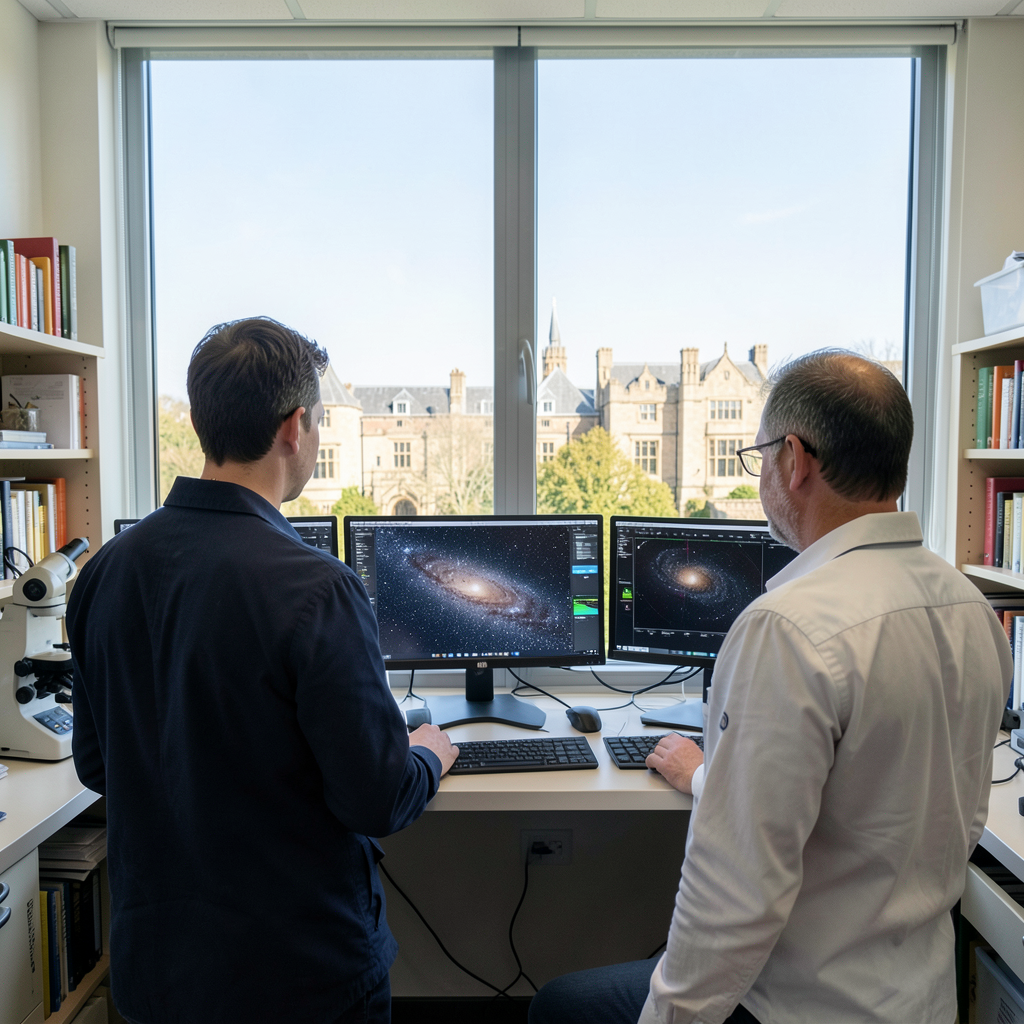

Scientists at a university in Sussex will take a primary part in a groundbreaking space exploration initiative backed by NASA.
The University of Sussex astrophysics department will contribute to the PRobe Mission for Far-Infrared Astrophysics, a new NASA venture that will employ a 1.8-metre far-infrared space telescope to investigate cosmic origins and universal development.
The project seeks to determine how celestial bodies including planets, stellar systems, and black holes emerge, while also examining how water first appeared on Earth.
Professor Seb Oliver, who holds the Chair of Astrophysics at the University of Sussex, will direct British involvement in the undertaking.
He stated that participating in the project represented an exceptional privilege.
He expressed considerable pride in the Sussex research team and recognised the significant contributions they made to advancing the mission to this significant stage.
He noted that receiving approval for the mission marked the result of extensive work carried out by collaborators throughout the United Kingdom and internationally.
The Sussex institution has substantially shaped the scientific direction of the mission, largely through pioneering software methodologies that enhance the telescope’s ability to capture detailed observations.
These technical approaches prove fundamental to fulfilling the project’s scientific ambitions, which encompass comprehensive surveys of the cosmos using far-infrared wavelengths.
The British segment of the programme receives backing from the UK Space Agency, with collaboration extending to specialists based at Cardiff University and Imperial College London.
Professor Sasha Roseneil, serving as Vice-Chancellor and President of the University of Sussex, offered commendation for the achievement.
She described it as an outstanding accomplishment for all those engaged with the project globally, nationally, and at Sussex.
She stated that NASA’s choice to progress the mission to its subsequent phase reflected the exceptional quality of research and creative work being advanced by the institution’s academics.
She affirmed the university’s considerable pride that a Sussex academic would be steering Britain’s participation in this ambitious collaborative venture and that Sussex researchers maintained such an essential position in delivering the mission’s objectives.