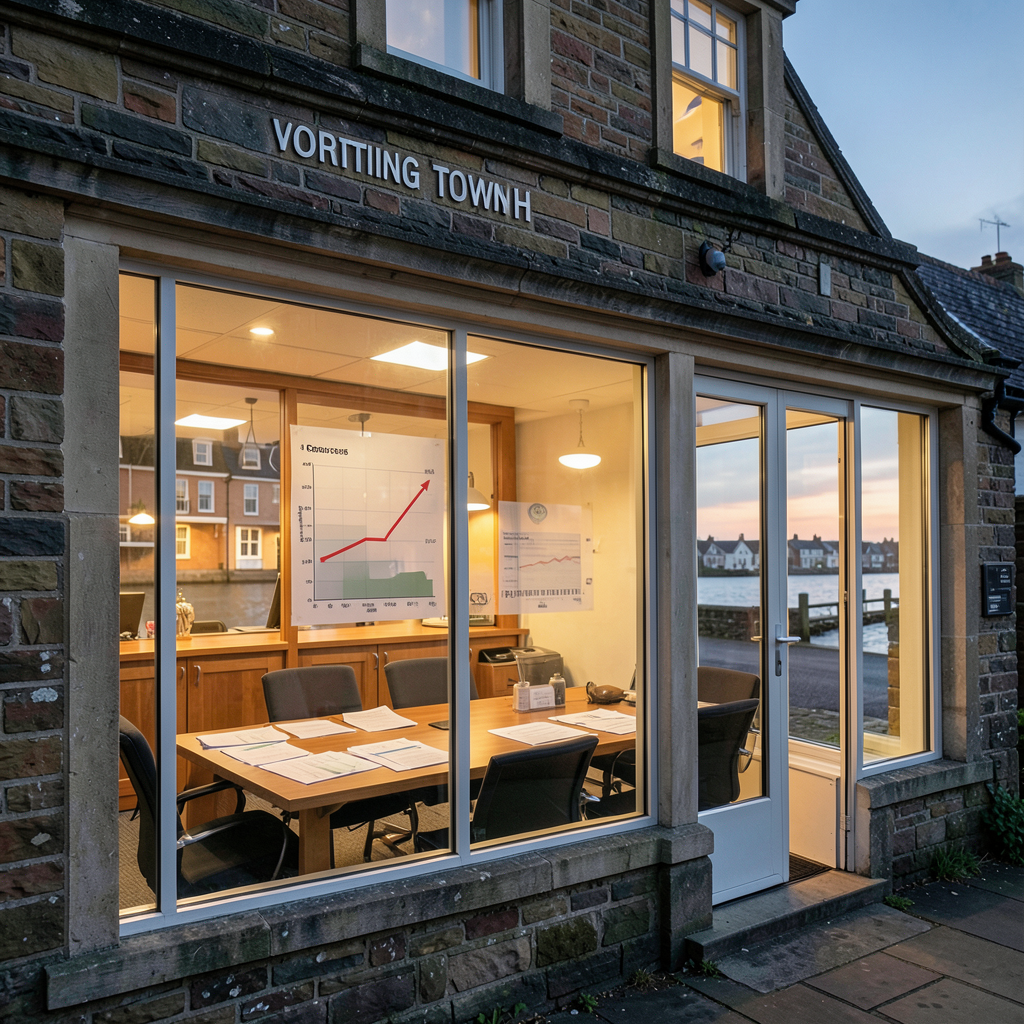

Councillors in Adur and Worthing are set to review financial performance data during an upcoming joint strategic committee gathering.
The quarterly revenue assessment covering the period through the end of June will be examined at the September 8 meeting.
The document evaluates actual expenditure and income during the opening three months of the 2026-27 financial year against established budgets.
Adur currently demonstrates a surplus position of £1,864,000, whereas Worthing anticipates requiring £3,697,000 in exceptional financial support during the current fiscal period due to persistent budgetary constraints.
The report indicates that Worthing Borough Council’s reserve funds have reached a critically depleted state.
The primary budget challenges stem from temporary accommodation requirements and social housing shortages.
Worthing faces an anticipated overspend of £1,507,000 in this category, with Adur projecting £76,000 in excess expenditure.
Insufficient availability of affordable private-sector housing, particularly in the Worthing area, forces extended stays in temporary facilities, compounding costs.
Housing benefit presents additional financial pressure, with the councils expecting to absorb £1,254,000 in unrecoverable expenses.
Of this total, £1,103,000 relates specifically to supported accommodation provisions.
Worthing’s cremation service anticipates £490,000 below-budget income due to reduced mortality rates nationally and greater uptake of private funeral director facilities.
Burial services, conversely, are expected to exceed projections by £44,000.
Several areas demonstrate stronger performance.
Car parking operations have generated £539,000 above estimates despite the closure of the Grafton multi-storey facility last year.
The High Street, Buckingham Road, Liverpool Gardens and surface car parks have been identified as the highest-performing sites.
Planning and development departments face combined shortfalls of £303,000, split between Worthing at £214,000 and Adur at £89,000.
This shortfall stems from reliance on major development proposals being submitted along with associated planning application fees.
The assessment identifies the most significant financial pressures as arising from increased demand for temporary accommodation, unreimbursed housing benefit expenditure and lower-than-anticipated income from certain service areas.
The joint strategic committee will consider the findings at their scheduled meeting on September 8.